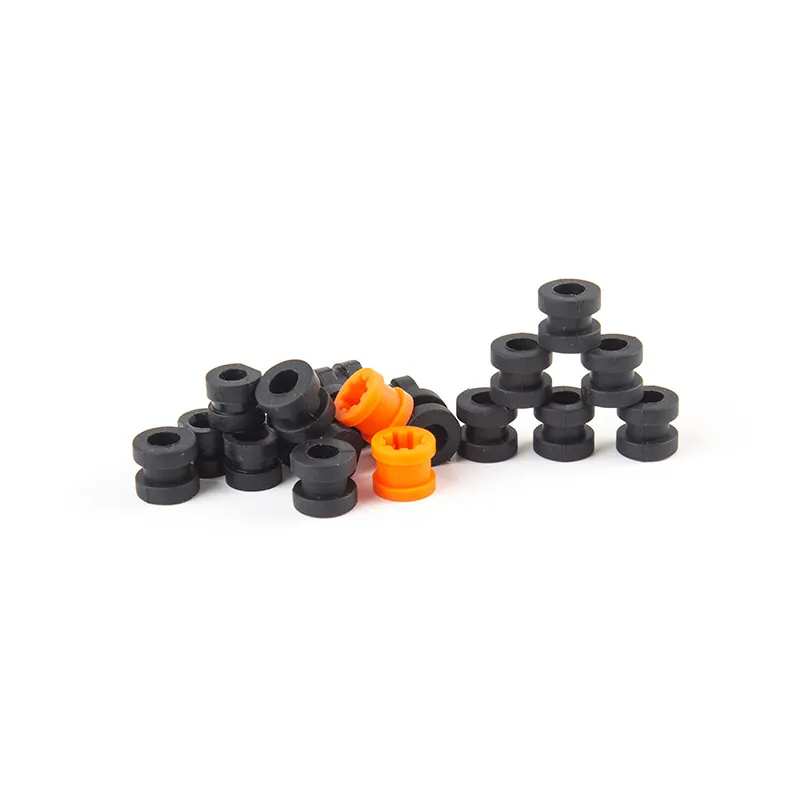
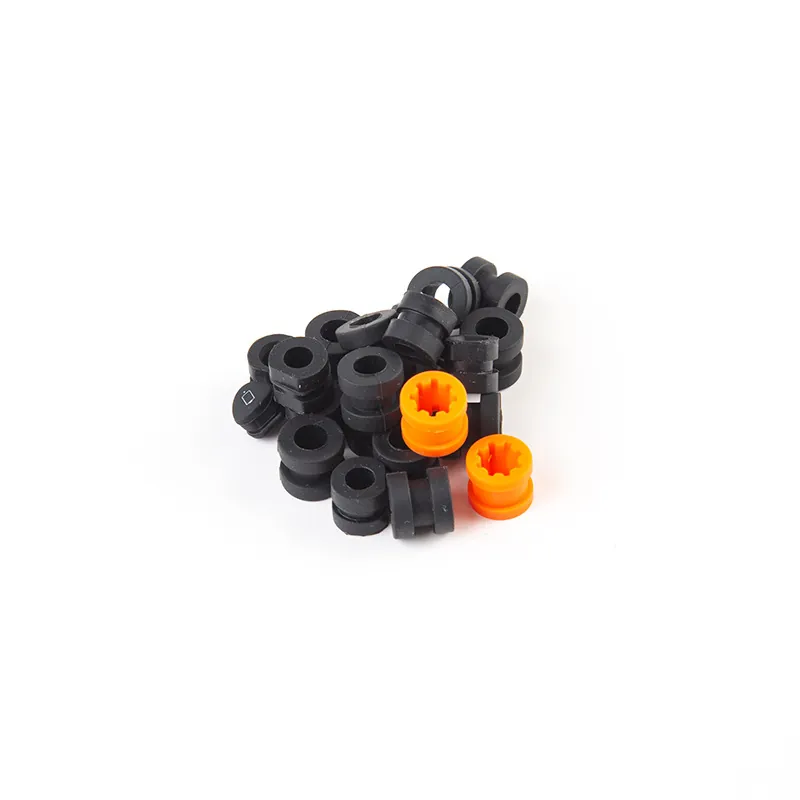
What Is a Silicone Vibration Damper?
Vibration damping is not a material purchase, it is a system problem. A damper only works when its stiffness and damping characteristics match the mass and frequency of the thing it is attached to, which is why a catalogue isolator selected by thread size rarely solves the problem it was bought for. We engineer custom silicone dampers against your measured or modelled frequency, and we iterate hardness and geometry until the settling time or transmissibility target is met.
Applications
- Collaborative and industrial robot end-effectors
- Precision instruments, optical mounts and sensor isolation
- Drone and UAV payload and camera isolation
- Machine frames, panels and enclosure isolation
- Structure-borne noise reduction in equipment housings
The Engineering Problem
Two failure patterns: the damper is too stiff, so vibration passes through almost unchanged, or too soft, so the isolated mass moves too far and the system becomes unstable. Both come from selecting a damper by size rather than by frequency. The engineering fix is to characterise the mass and frequency, then tune stiffness and damping to suit — which for elastomers means choosing hardness and geometry deliberately.
Product Features
- Damping characteristics engineered against your frequency and mass
- Iteration across hardness and geometry until the target is met
- Low creep and stable compression set for long-term performance
- Temperature stability of damping behaviour
- Integrated mounting features: studs, bonded plates, press-fit bosses
- Prototype samples for measurement on your actual assembly
- Available as moulded pads, mounts, grommets and bushings
Material Options
| Material | When we would choose it |
|---|---|
| Silicone | Wide temperature range and stable damping behaviour; the default for precision applications |
| EPDM | Washdown and outdoor environments where some oil resistance is not needed |
| NBR | Oil and grease exposure at moderate temperature |
| CR (Neoprene) | Where moderate oil and weather resistance plus flame retardance is required |
Material Properties
| Property | Typical value / comment |
|---|---|
| Hardness | The primary lever on stiffness. Adjusted to tune the system frequency |
| Damping factor | Compound-dependent; determines how quickly vibration decays |
| Compression set | Must stay low or the isolated mass slowly settles and the geometry changes |
| Dynamic stiffness | Can differ from static stiffness. Relevant where the excitation is continuous |
| Temperature stability | Silicone holds its damping behaviour over a much wider range than NBR or EPDM |
Specifications
| Parameter | What we work to |
|---|---|
| Dimensions | Moulded to drawing or designed with you against the system requirement |
| Tolerance | ±0.05 mm on critical moulded dimensions; stiffness is the primary controlled parameter |
| Operating temperature | Silicone -60 to +230 C; EPDM -50 to +150 C; NBR -40 to +120 C |
| Hardness | Typical 30-70 Shore A, selected to tune stiffness |
| Colour | Black, natural or to sample |
| Surface finish | As-moulded or defined for cosmetic parts |
| Waterproof / IP | Sealing features can be combined with damping in one part |
| Chemical resistance | Compound matched to your cleaning and contamination exposure |
Production Process
- System mass and excitation frequency established
- Required stiffness and damping range calculated
- Compound and geometry proposal with hardness options
- Mould built; prototype samples at two or three hardness values
- Measurement on your assembly; geometry or hardness iterated if needed
- Production with locked parameters and inspection records
- Dimensional and hardness records issued with shipment
Customization
- Stiffness tuned by hardness and geometry to your frequency
- Bonded metal plates or threaded studs for installation
- Combined damping and sealing function in a single part
- Colour and surface finish for visible components
- Multiple stiffness zones in one part where the load path requires it
- Kitted assemblies with fasteners
Tooling & Prototyping
Damper tooling is built to allow iteration: where the frequency target is uncertain, we produce prototype samples at two or three hardness values from the same tool family so the tuning can be measured rather than guessed. Tooling cost is refundable against volume production.
MOQ, Quality Control & Packaging
| Item | How it is handled |
|---|---|
| MOQ | Quoted per project against part size, tooling and the number of tuning iterations required. |
| Quality control | Material verification, dimensional inspection and hardness testing; stiffness verification where specified |
| Packaging | Bulk, bagged, trayed or kitted |
| Documentation | Dimensional and hardness records; test data where applicable |
Material Compliance
The silicone compound we mould carries third-party SGS reports covering EU RoHS 2015/863, REACH SVHC, phthalates, PAHs, halogen, US FDA 21 CFR 177.2600, LFGB Section 30 and 31, and GB 4806.16-2025 - all Pass. A part's compliance depends on the compound grade, the colour and the process, so the grade is matched to your requirement at quotation stage. See the material compliance page for the report numbers.
Silicone Vibration Dampers — Frequently Asked Questions
From the mass being isolated and the excitation frequency. Hardness controls stiffness, so it is the tuning lever. Where the system data is uncertain we produce samples at several hardness values and measure on your assembly.
We can usually get close, but you will get a better result with data. Even a rough measurement of the problem frequency and the mass involved lets us tune properly instead of iterating blind.
Catalogue isolators are selected by size and load rating, not by frequency match. If the characteristic frequency does not line up, the isolator does not solve the problem.
Elastomers change with age, temperature and load — compression set being the main mechanism. Designing for low compression set and specifying the right compound is what makes a damper long-lived.
Yes, and it is often the better design. Combining the functions removes an interface and a potential leak path.
Dimensional and hardness records are standard. Where a stiffness or transmissibility target is specified, we agree the verification method at RFQ stage.
Related Products
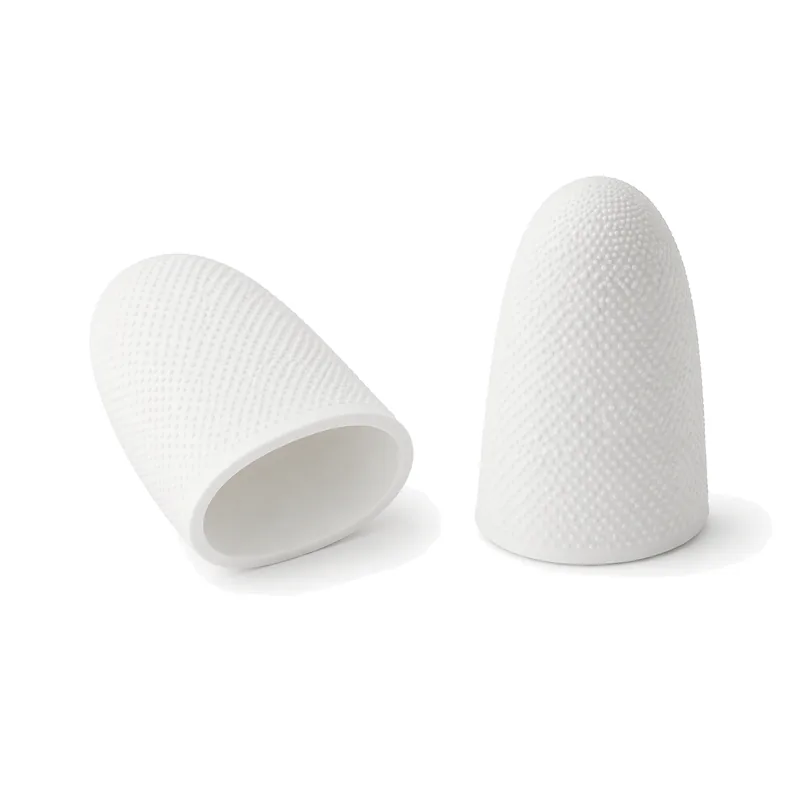
Protective Sleeves & Covers
Silicone sleeves and boots protecting joints, cables and connectors.
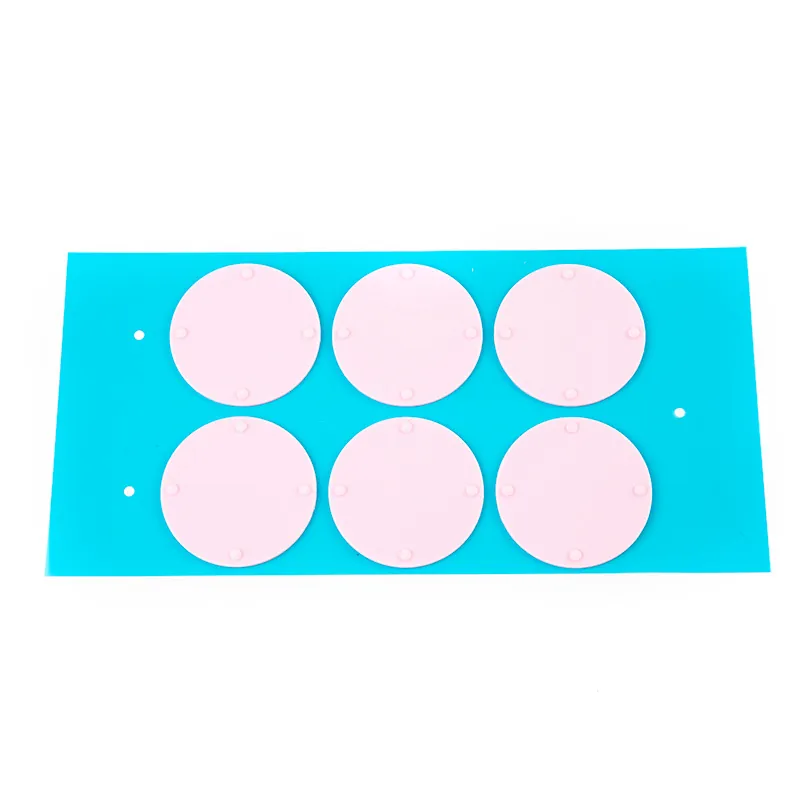
Rubber Feet & Pads
Non-slip feet, bumpers and pads with controlled friction.
Robotics
How we engineer sealing, damping and protection components for robots.
Related Industries
Robotics
Sealing, damping and protective components for industrial, collaborative and service robots.
Industrial Automation
Seals, gaskets and moulded parts for actuators, conveyors and machine frames.
Electronics
Enclosure sealing, insulation and interface components for controllers and instruments.
Drones & UAV
Waterproof sealing and vibration isolation for airframes and payloads.