Components used in drone platforms
Overview
Drones impose a constraint most other applications do not: every gram matters. That changes the engineering, because the usual answer — specify a bigger, thicker, more robust component — is not available. A drone seal must achieve its sealing target at the minimum material volume, and a drone damper must isolate vibration without adding mass that degrades flight performance. The failure consequence is also different: a component that fails in flight does not stop a production line, it loses an aircraft.
The Problem This Solves
The dominant drone component problems are water ingress into electronics, vibration reaching camera payloads and destabilising the control loop, cable movement fatiguing conductors, and UV and temperature cycling ageing a part far faster than its ground-based equivalent. All four are addressed by design and material selection, and the weight constraint makes the design problem tighter rather than looser.
Component Families for Drones and UAV
| Family | Function |
|---|---|
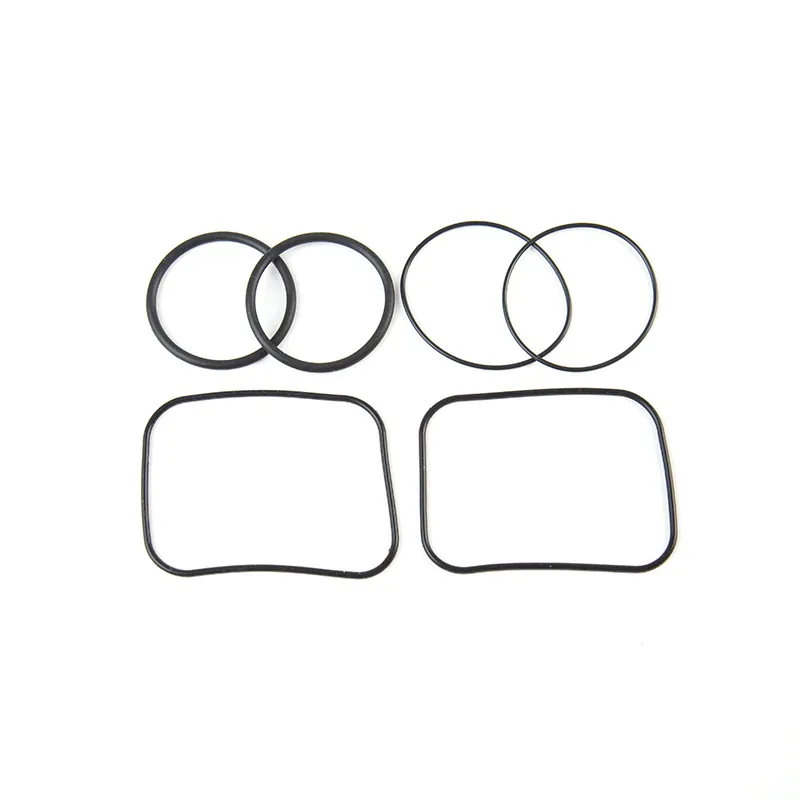
| Waterproof seals and gaskets | Electronics bay, motor and connector sealing |
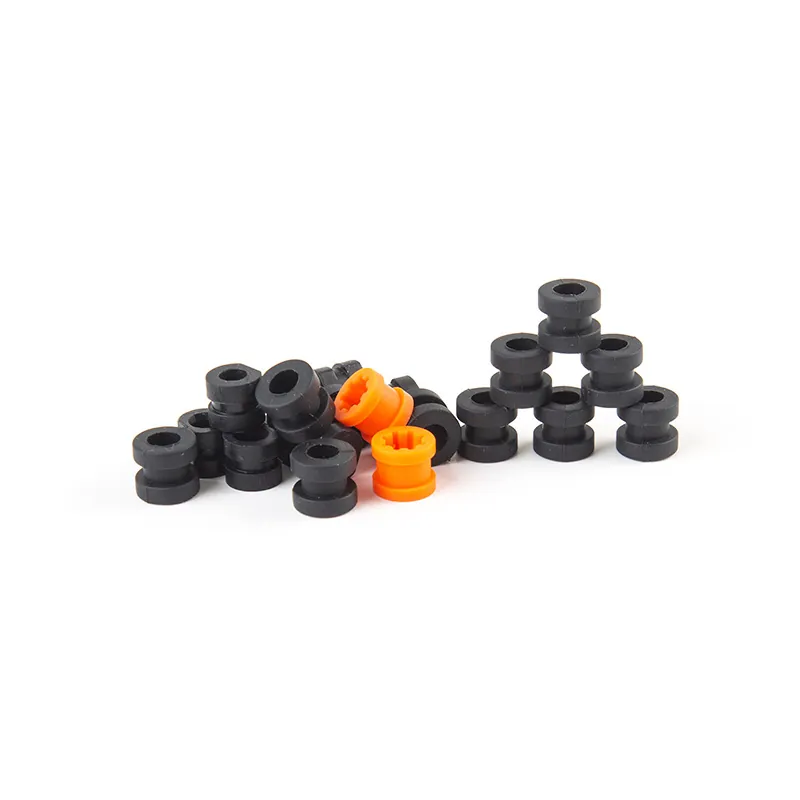
| Grommets and cable seals | Pass-through sealing where cables leave a sealed volume |
| Vibration isolation | Camera, gimbal and sensor isolation to protect image quality and control stability |
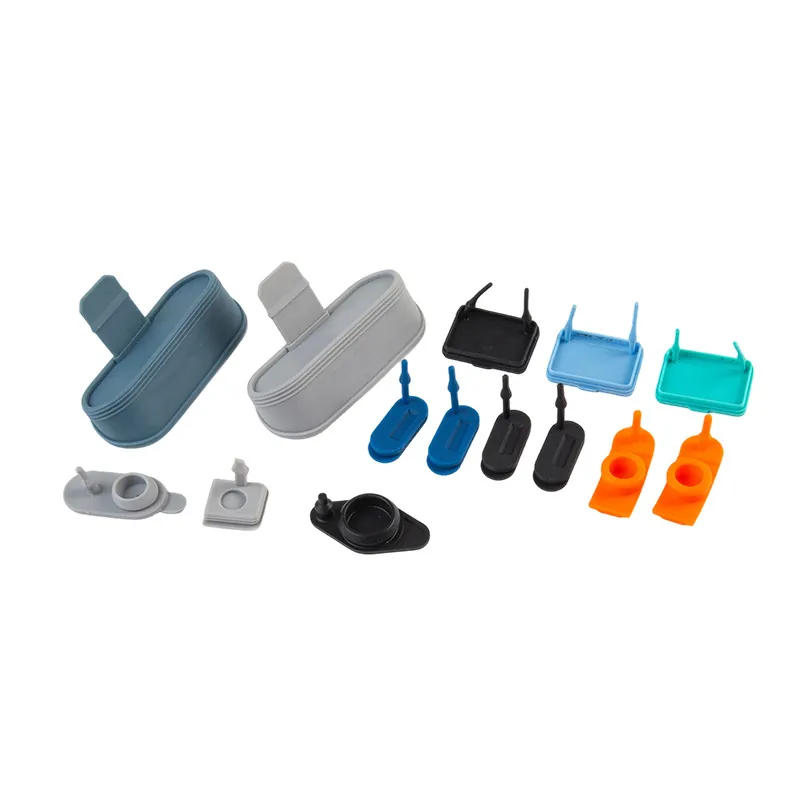
| Protective sleeves and boots | Mechanical protection for exposed joints and connectors |
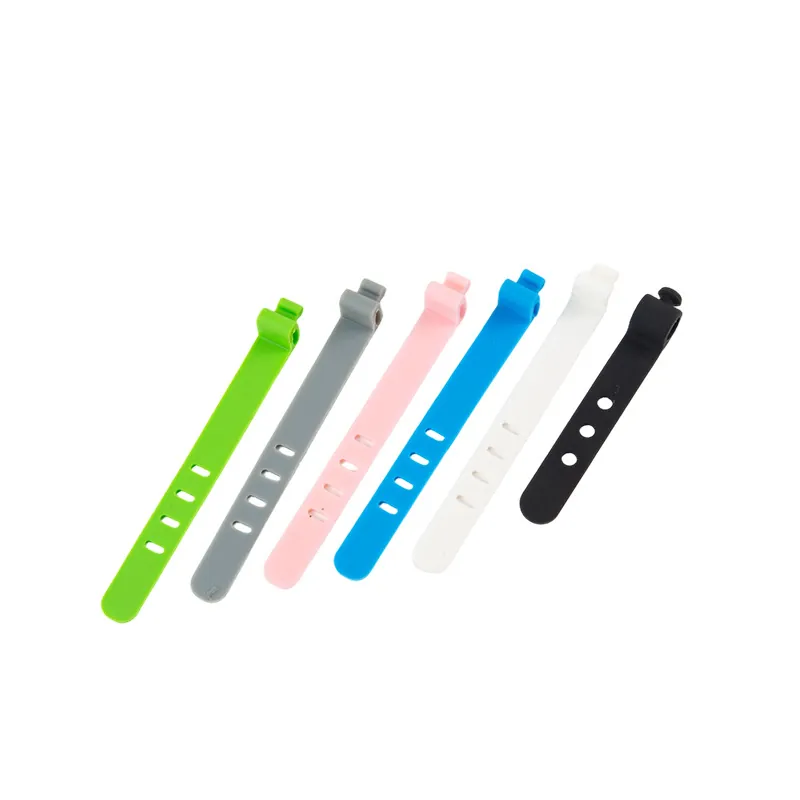
| Cable management | Routing retention and strain relief that resists fatigue |
| Feet and landing pads | Contact protection and cushioning |
Designing Under a Weight Budget
- Wall thickness minimised while still meeting the sealing compression band
- Geometry designed so material is where the stress is, not uniformly distributed
- Compounds selected for UV, ozone and thermal cycling resistance
- Integration of multiple functions into a single part to remove interfaces and mass
- Translucent grades where visual inspection of internals is wanted
Vibration and Camera Payloads
Vibration reaching a camera payload shows up as rolling shutter artefacts, reduced stabilisation headroom and shortened gimbal life. Passive elastomer isolation is the lightest way to address it. The engineering is frequency-based: the isolator must be tuned to the mass of the payload and the frequency of the excitation, which is why a damper selected by size will underperform. Where the payload mass is not yet fixed, we produce samples at more than one hardness so the tuning can be measured rather than guessed.
Cables: The Most Underestimated Failure
Conductor fatigue from uncontrolled cable movement is a common cause of intermittent failures that are difficult to diagnose on the ground and catastrophic in the air. The fix is mechanical rather than electrical: constrain the cable so bending happens over a defined radius in a location designed for it, and provide strain relief at the terminations. Moulded silicone components do this job well and add little mass.
How These Components Are Made
- Drawing review with manufacturability and tolerance feedback before quoting
- Compound selection against temperature, chemistry and compression set
- Tooling design and manufacture in-house, including shrinkage compensation
- First-article samples shipped with inspection data for your testing
- Process parameters locked after approval, with in-process checks in production
- Dimensional, hardness and visual inspection records issued with shipment
Case Studies
Frequently Asked Questions
By controlling geometry rather than thickness. A correctly designed gland achieves the sealing compression band with less material than a thick gasket, and integrating the seal into an existing part removes a separate component.
Silicone and EPDM both resist UV and ozone well. Silicone is usually preferred for the wider temperature range and stability of mechanical properties.
From the payload mass and the excitation frequency, not from the mounting size. Where the payload is not finalised we produce samples at several hardness values so the tuning can be measured.
Yes. The solution is geometric: control the bend radius and the location where flexing occurs, and provide strain relief at the termination. Moulded silicone parts do this at low mass.
Yes. We reverse-engineer from drawings or samples, produce samples for evaluation, and design production tooling. Tooling cost is refundable against volume production.
Yes. Pilot production before a volume commitment is normal for us, and the tooling refund model is designed to support it.
Related Pages
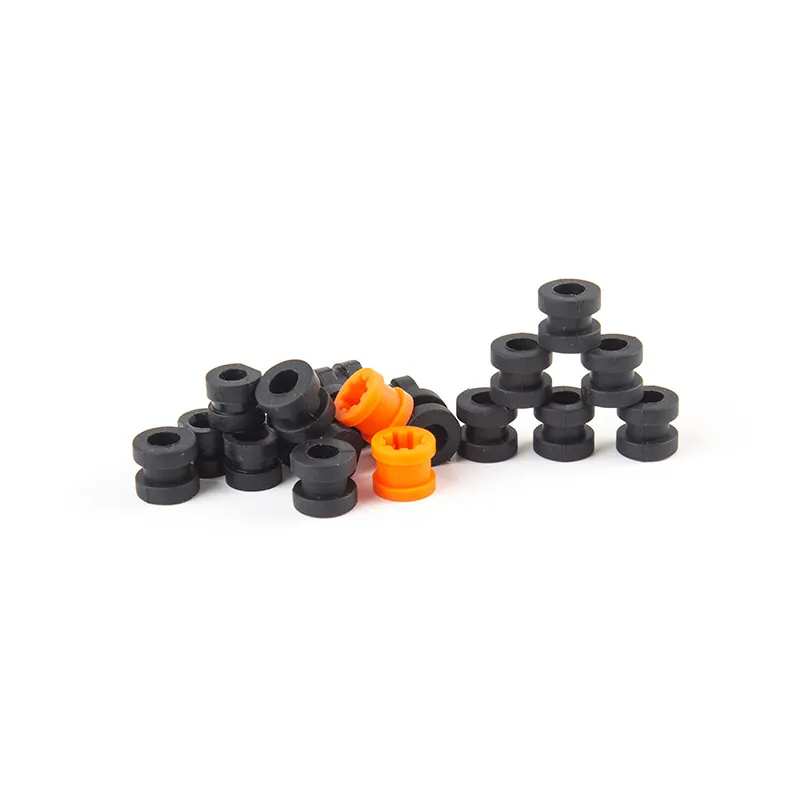
Vibration Dampers
Tuned damping for camera payloads, gimbals and sensors.
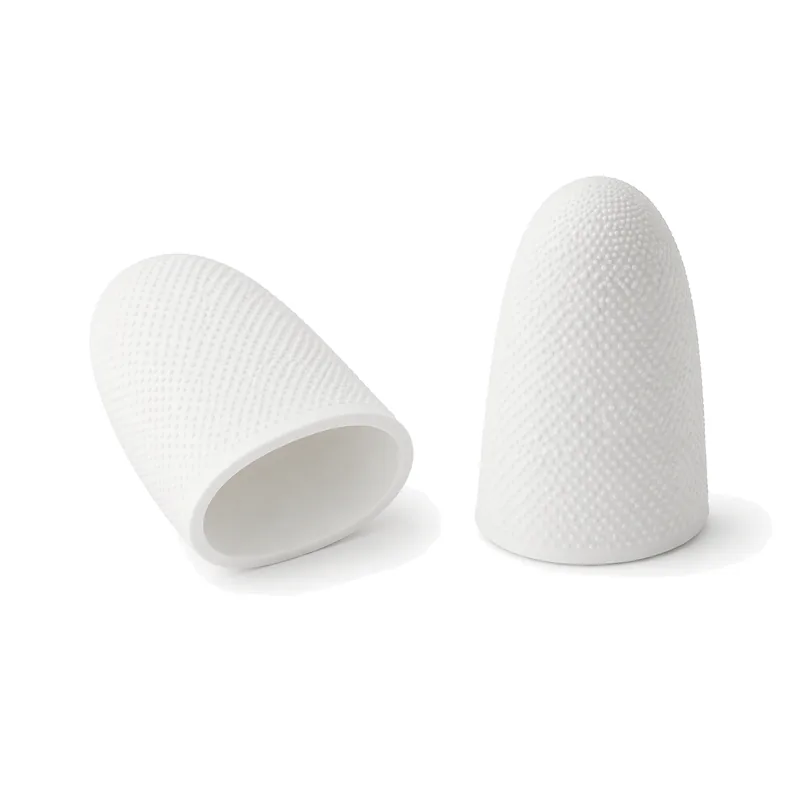
Protective Sleeves & Covers
Sleeves and boots for joints, cables and connectors.
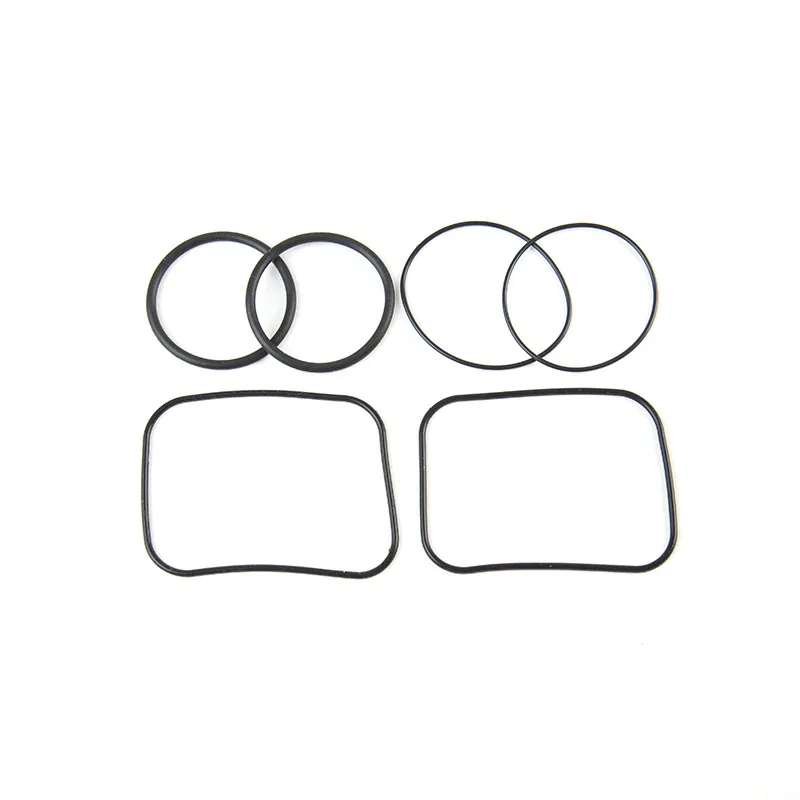
Silicone Gaskets
Waterproof sealing for electronics bays and housings.
Robotics
Sealing, damping and protection for continuously moving mechanisms.