What Are Rubber Feet and Pads?
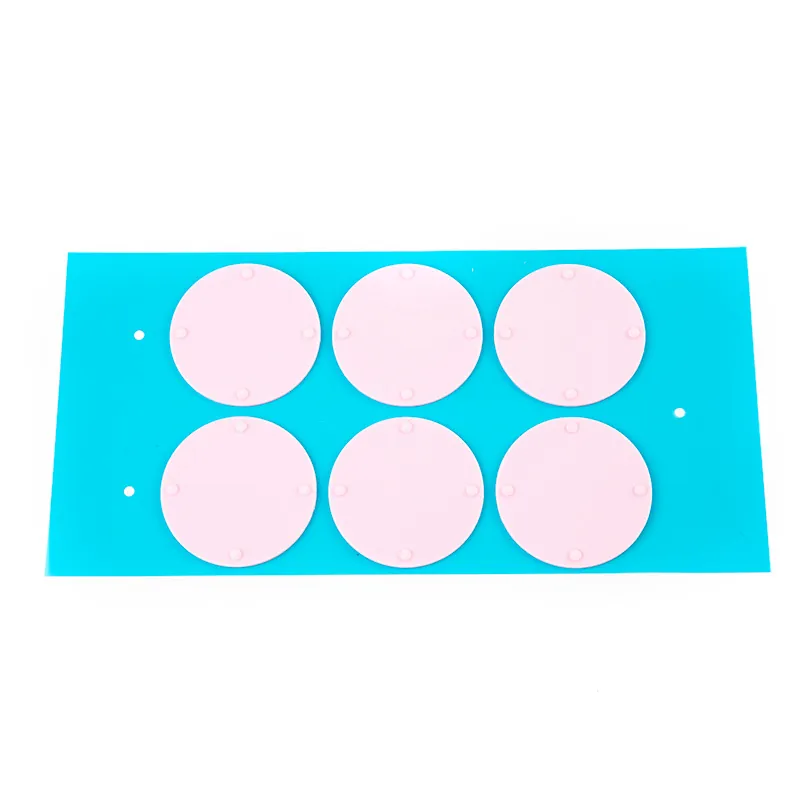
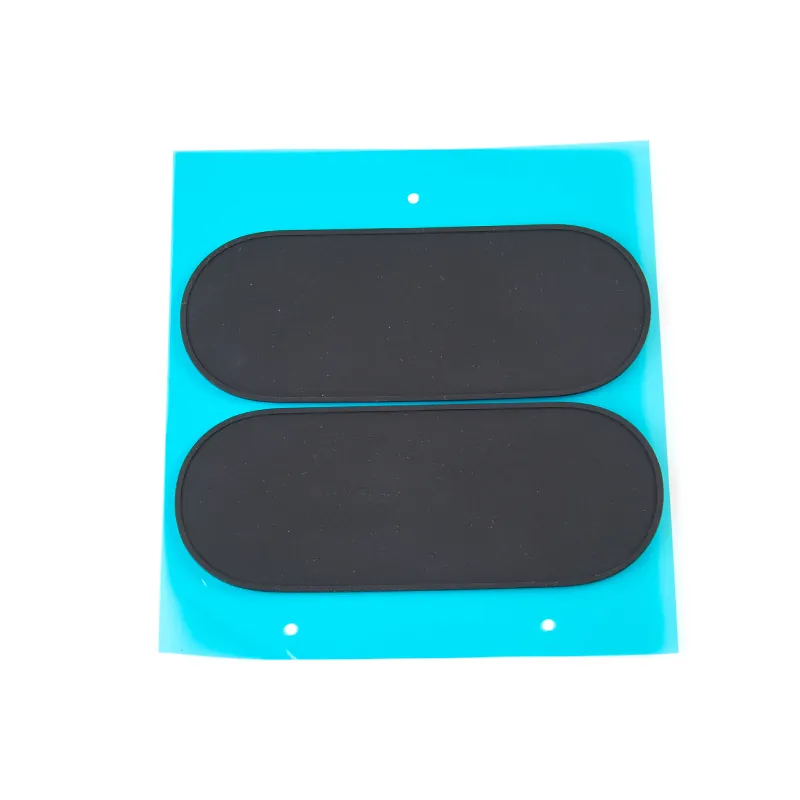
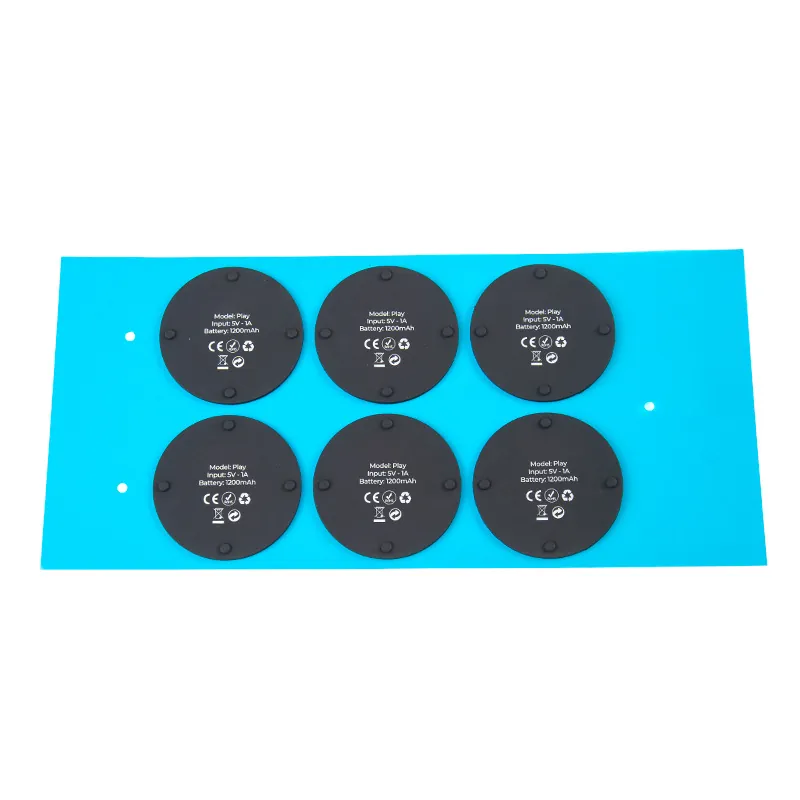
Feet and pads are the quiet failure point in a lot of equipment. A machine that walks across the floor, a device that slides on a bench, a bumper that flattens and stops protecting, a foot that leaves a mark on the surface beneath it — all of these are properties of the compound and geometry rather than of the design of the equipment. We mould custom feet, pads and bumpers with friction, hardness and compression set treated as engineering parameters, including geometries and features that sheet-cut parts cannot provide.
Applications
- Equipment and machine feet for stability and levelling
- Non-slip pads for instruments and bench devices
- Bumpers, stops and protective pads
- Grips, handles and tactile surfaces
- Grommets and edge protection
The Engineering Problem
The two complaints we hear most are walking equipment and surface marking. Walking comes from insufficient friction or from hardness that is wrong for the load — the pad deflects and the machine creeps. Marking comes from plasticiser migration or from the wrong elastomer in contact with a finished surface. Both are solved by specifying compound and geometry rather than by increasing thickness.
Product Features
- Friction characterised against your floor or contact surface
- Hardness selected for the load per foot to control deflection
- Low compression set so the foot does not flatten permanently
- Non-marking and non-staining compounds available
- Moulded features: ribs, suction cups, studs, recesses, integrated fasteners
- Colour matching where the part is visible
- Defined surface textures for grip
Material Options
| Material | When we would choose it |
|---|---|
| Silicone | High friction, wide temperature range, non-marking; food and skin contact grades available |
| EPDM | Outdoor and washdown equipment; economical and weather resistant |
| NBR | Oil and grease exposure; general industrial equipment |
| SBR / NR | Cost-driven applications with good mechanical properties but limited ozone resistance |
Material Properties
| Property | Typical value / comment |
|---|---|
| Friction coefficient | Selected against the surface the equipment sits on — smooth floor, bench, deck |
| Hardness | Typically 40-70 Shore A. Softer for grip, harder for load bearing |
| Compression set | Low compression set keeps the foot working instead of flattening |
| Abrasion resistance | Determines life on a machine that is repositioned often |
| Non-marking behaviour | Compound selected to avoid staining finished surfaces |
Specifications
| Parameter | What we work to |
|---|---|
| Dimensions | Moulded to drawing; no restriction to sheet thicknesses |
| Tolerance | ±0.05 mm on critical moulded dimensions |
| Operating temperature | Silicone -60 to +230 C; EPDM -50 to +150 C; NBR -40 to +120 C |
| Hardness | Typical 40-70 Shore A |
| Colour | Black standard; colour matching to sample available |
| Surface finish | Smooth, ribbed, dimpled or textured for grip |
| Waterproof / IP | Sealing features can be combined where the pad also seals |
| Chemical resistance | Compound matched to oils, cleaning agents and floor finishes |
Production Process
- Load per foot and contact surface established
- Compound and hardness proposed for friction, set and marking behaviour
- Geometry and surface texture designed for the grip requirement
- Mould built; first-article samples for fit and friction testing
- Production with locked parameters and in-process inspection
- Dimensional and hardness records issued with shipment
Customization
- Ribs, dimples or suction-cup geometry for grip
- Integrated studs, bosses or recesses for fastening
- Colour matching for visible parts
- Non-marking and non-staining compounds
- Combined foot and sealing function
- Kitted with fasteners or adhesive backing
Tooling & Prototyping
Moulding rather than sheet-cutting opens up ribs, suction geometry, integrated fasteners and thickness variation — features that decide whether a foot actually grips. Tooling is designed and built in-house and is refundable against volume production orders.
MOQ, Quality Control & Packaging
| Item | How it is handled |
|---|---|
| MOQ | Quoted per project against part size, tooling and compound. |
| Quality control | Material verification, dimensional inspection, hardness testing and visual inspection |
| Packaging | Bulk, bagged or kitted |
| Documentation | Dimensional and hardness records; material sheet on request |
Material Compliance
The silicone compound we mould carries third-party SGS reports covering EU RoHS 2015/863, REACH SVHC, phthalates, PAHs, halogen, US FDA 21 CFR 177.2600, LFGB Section 30 and 31, and GB 4806.16-2025 - all Pass. A part's compliance depends on the compound grade, the colour and the process, so the grade is matched to your requirement at quotation stage. See the material compliance page for the report numbers.
Rubber Feet & Pads — Frequently Asked Questions
Almost always friction combined with hardness: the pad deflects under load and creeps. A compound with higher friction and a hardness matched to the load per foot fixes it more reliably than simply making the pad thicker.
Non-marking silicone grades are usually the safest choice. Tell us the floor finish and we will select accordingly — this is a real specification, not a guess.
Yes. Moulding allows integrated mounting features, which removes an assembly step and a potential failure point that sheet-cut parts cannot provide.
Both resist weather. EPDM is usually more economical; silicone gives a wider temperature range and higher friction.
Where the foot must stay attached under shear, bonding to a metal or plastic plate is more reliable than relying on adhesive. We produce bonded assemblies.
It depends on the load and the surface. Thicker is not automatically better — beyond a point it increases deflection and reduces stability. Send the load per foot and we will recommend.
Related Products
Vibration Dampers
Tuned silicone dampers that isolate vibration rather than absorb impact.
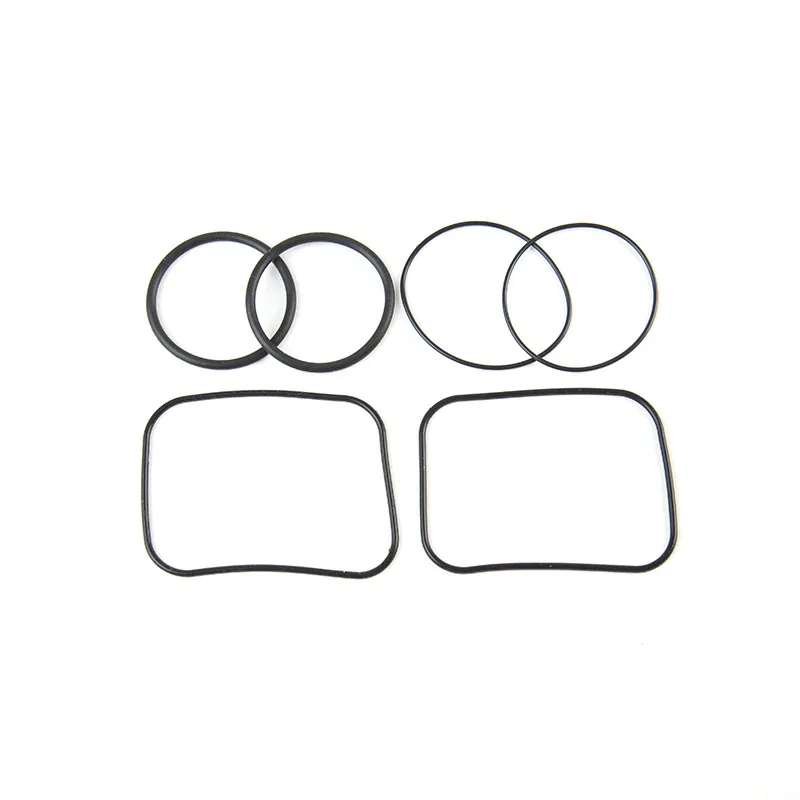
Silicone Gaskets
Waterproof and high-temperature gaskets for enclosure sealing.
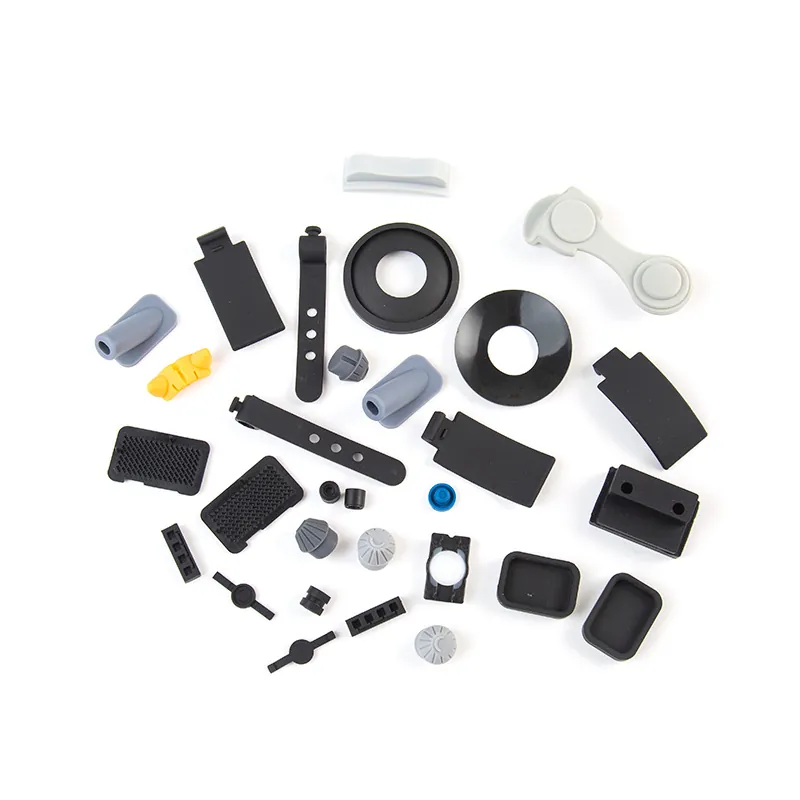
Custom Rubber Parts
Bespoke rubber components in EPDM, NBR, FKM, NR, SBR and CR.
Related Industries
Robotics
Sealing, damping and protective components for industrial, collaborative and service robots.
Industrial Automation
Seals, gaskets and moulded parts for actuators, conveyors and machine frames.
Electronics
Enclosure sealing, insulation and interface components for controllers and instruments.
Drones & UAV
Waterproof sealing and vibration isolation for airframes and payloads.