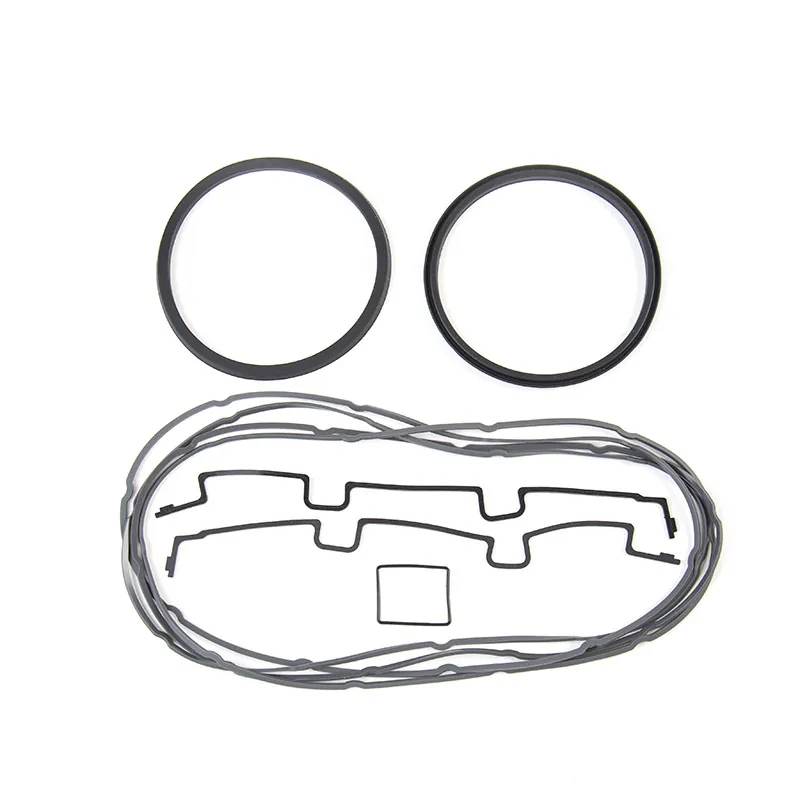
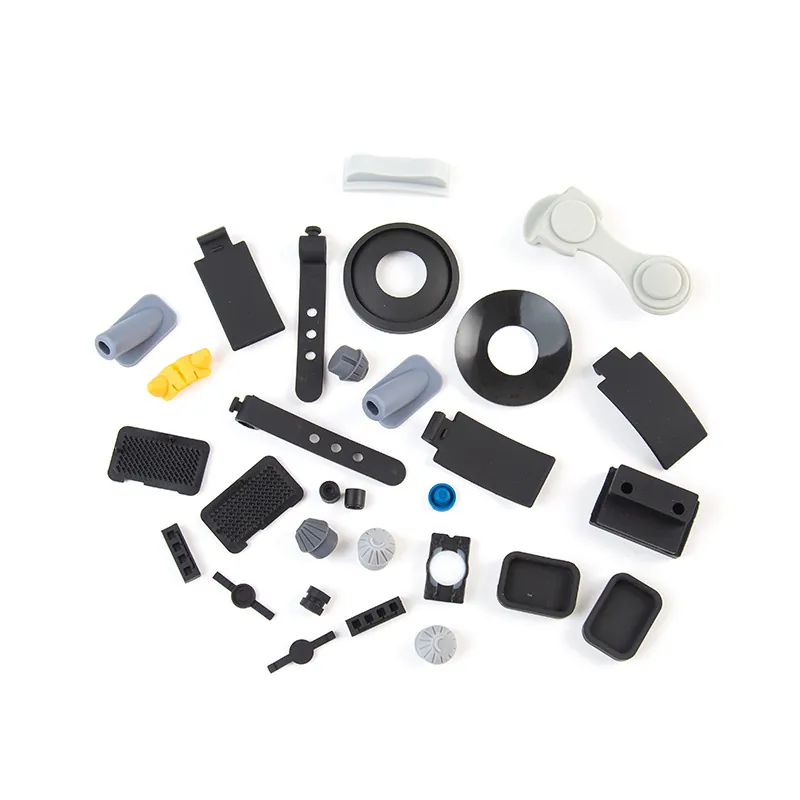
Examples of components produced by compression moulding

Overview
Compression moulding places a measured preform of uncured compound into a heated mould cavity and closes it under pressure. The material flows to fill the cavity and cures. It is the most flexible of the moulding processes and the most economical for the majority of custom silicone and rubber parts: it tolerates thick sections, high hardness, large parts and modest volumes without requiring the tooling investment that injection moulding demands.
The Problem This Solves
Compression moulding is often dismissed as unsophisticated, but its economics are hard to beat for custom work — and getting it wrong is expensive. Preform weight, mould temperature, cure time and closing pressure all interact. An under-filled cavity gives a short part, an over-filled one gives heavy flash and a seam in the wrong place, and a mould that is too cool gives an under-cured part that will fail in service rather than at inspection. These parameters are established on first-article samples and then locked.
When Compression Moulding Is the Right Choice
- Thick sections, where injection moulding would need long cycle times
- Medium-to-high hardness compounds
- Large parts that would need very large injection tooling
- Low-to-mid volumes, where injection tooling cannot be justified
- Short runs and pilot production before a volume decision
- Parts where flash placement is not critical on the sealing face
Process Parameters We Control
| Parameter | Why it matters |
|---|---|
| Preform weight and shape | Controls fill, flash and material waste |
| Mould temperature | Drives cure rate and part consistency |
| Cure time | Too short gives under-cured parts that fail in service, not in inspection |
| Closing pressure and profile | Determines flow, knit-line quality and flash |
| Deflashing method | Decides whether sealing faces are clean |
| Post-cure | Where required for compression set and volatile removal |
Compare the Moulding Processes
| Process | Best for | Limitation |
|---|---|---|
| Compression moulding | Thick sections, high hardness, low-to-mid volume, large parts | Longer cycle time; more manual handling |
| Injection moulding | High volume, tighter tolerances, complex geometry | High tooling cost; not economical at low volume |
| Transfer moulding | Parts with inserts and complex shapes at mid volume | Tooling complexity; less common in silicone |
| LSR injection | Thin walls, precision, clarity, very long fatigue life | Higher tooling cost; best justified at volume |
Frequently Asked Questions
If the volume is high enough to justify injection tooling and the geometry needs it, injection wins on part cost. Below that, and for thick or high-hardness parts, compression moulding is more economical overall. We will model both in the quote where it is genuinely close.
From prototypes and pilot runs through to mid volume. The exact break-even against injection depends on part size and geometry, and we will tell you where it sits for your part.
Usually preform weight or mould closing condition. Both are controllable — flash is a process parameter, not an inevitable outcome.
Yes. Compression moulding is the practical route for parts that would require impractically large injection tooling.
It often is not, at inspection — it fails in service. That is why cure parameters are established on first articles and locked rather than varied for output.
Yes. Deflashing is part of production, and where flash placement would affect a sealing face it is controlled in mould design.