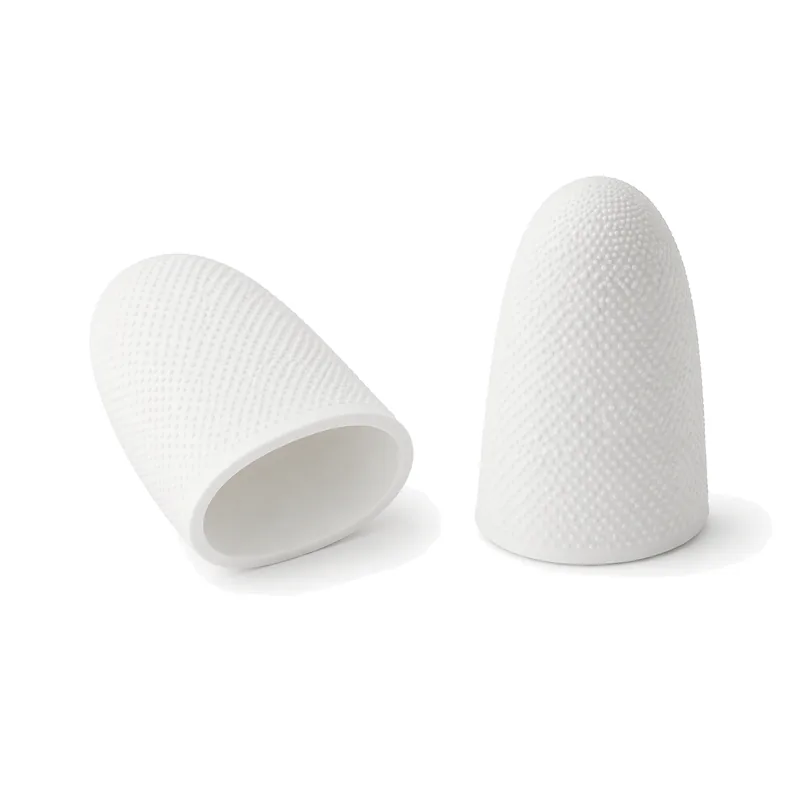


What Are Protective Sleeves and Covers?
Protective sleeves are the cheapest way to extend the life of an expensive assembly. A joint, cable run, sensor or connector that is exposed to dust, coolant, swarf or washdown will fail eventually; a correctly designed silicone sleeve moves that failure well outside the service interval. The engineering difficulty is that the sleeve must protect the part while still allowing it to move, and that is where geometry matters: a sleeve that is too stiff restricts motion, one that is too thin abrades through, and one that is not sealed at both ends lets contamination in anyway.
Applications
- Robot joint, wrist and actuator protection
- Cable, harness and connector protection
- Sensor and camera housing protection
- Bellows and flexible covers over moving mechanisms
- Protection of exposed electronics in industrial environments
The Engineering Problem
Protective sleeves fail in three ways: they abrade through at the flex point, they restrict the motion they were meant to permit, or they let contamination in at an unsealed end. All three are design problems. Solving them means controlling wall thickness distribution, designing the fold geometry so motion happens in the intended place, and specifying the sealing interface at each end.
Product Features
- Wall thickness profiled so flexure happens where it should
- Bellows and fold geometry designed against the actual motion envelope
- Sealing interfaces at each end designed in, not left to the installer
- Abrasion-resistant compounds for parts that rub against edges
- Temperature range matched to the equipment environment
- Options for corrugated, smooth and tapered sleeves
- Colour and surface finish options where the part is visible
Material Options
| Material | When we would choose it |
|---|---|
| Silicone | The default: wide temperature range, weather resistance, flexibility at low temperature |
| LSR | Thin-wall sleeves and where high fatigue life under repeated flexing is required |
| EPDM | Washdown, steam and weather exposure where the temperature range is moderate |
| CR (Neoprene) | Where moderate oil resistance or flame retardance is also required |
Material Properties
| Property | Typical value / comment |
|---|---|
| Flex fatigue resistance | The controlling property for bellows and sleeves that move continuously |
| Tear resistance | Determines resistance to abrasion at edges and clamp points |
| Hardness | Typically 40-60 Shore A: soft enough to flex, firm enough not to collapse under suction |
| Temperature range | Silicone -60 to +230 C; EPDM -50 to +150 C |
| Chemical resistance | Selected against coolant, washdown chemicals and oils present |
Specifications
| Parameter | What we work to |
|---|---|
| Dimensions | Moulded to drawing; designed against your motion envelope where needed |
| Tolerance | ±0.05 mm on critical moulded dimensions; wall thickness controlled where flexure matters |
| Operating temperature | Silicone -60 to +230 C; EPDM -50 to +150 C (compound dependent) |
| Hardness | Typical 40-60 Shore A |
| Colour | Black, natural/translucent or to sample |
| Surface finish | Smooth or textured; matte finish hides handling marks |
| Waterproof / IP | End sealing interfaces designed to support IP targets |
| Chemical resistance | Compound matched to coolant, washdown and oil exposure |
Production Process
- Motion envelope and contamination risk established
- Wall thickness distribution and fold geometry designed
- End sealing interfaces specified
- Compound proposed against temperature, chemistry and flex fatigue
- Mould built; first-article samples for fit and motion testing
- Production with locked parameters and in-process inspection
- Dimensional records issued with shipment
Customization
- Bellows and fold geometry designed to your motion range
- Integrated end seals, clamps or retaining features
- Multiple wall thicknesses in one part
- Abrasion-resistant contact zones
- Colour matching and surface texture for visible parts
- Laser marking or identification features
Tooling & Prototyping
Sleeve and bellows tooling determines the flex behaviour, so the mould design is where the engineering happens. Where motion is complex or continuous, we produce samples for testing on the real mechanism before production. Tooling cost is refundable against volume orders.
MOQ, Quality Control & Packaging
| Item | How it is handled |
|---|---|
| MOQ | Quoted per project against part size, geometry complexity and tooling. |
| Quality control | Material verification, dimensional inspection, wall thickness checks and visual inspection |
| Packaging | Bulk, bagged or trayed to prevent deformation in transit |
| Documentation | Dimensional records; material sheet on request |
Material Compliance
The silicone compound we mould carries third-party SGS reports covering EU RoHS 2015/863, REACH SVHC, phthalates, PAHs, halogen, US FDA 21 CFR 177.2600, LFGB Section 30 and 31, and GB 4806.16-2025 - all Pass. A part's compliance depends on the compound grade, the colour and the process, so the grade is matched to your requirement at quotation stage. See the material compliance page for the report numbers.
Protective Sleeves & Covers — Frequently Asked Questions
Increase the wall thickness locally, change the fold geometry so flexure is distributed rather than concentrated, or change the compound for better flex fatigue resistance. Usually it is geometry first.
If contamination is the concern, yes — an open end is where the contamination gets in. The end sealing interface needs designing in rather than relying on a cable tie.
Both work. EPDM is economical for water, steam and washdown. Silicone is preferred for wider temperature range, low-temperature flexibility and where skin contact matters.
Yes, where visual inspection of the protected part is wanted. Translucent grades are available, and we will advise on how transparency changes with wall thickness.
Yes. Give us the motion range and the contamination risk and we will propose the geometry. Samples then verify it on the real mechanism.
Silicone and EPDM stay flexible well below freezing; NBR stiffens. If the equipment operates cold, specify accordingly.
Related Products
Vibration Dampers
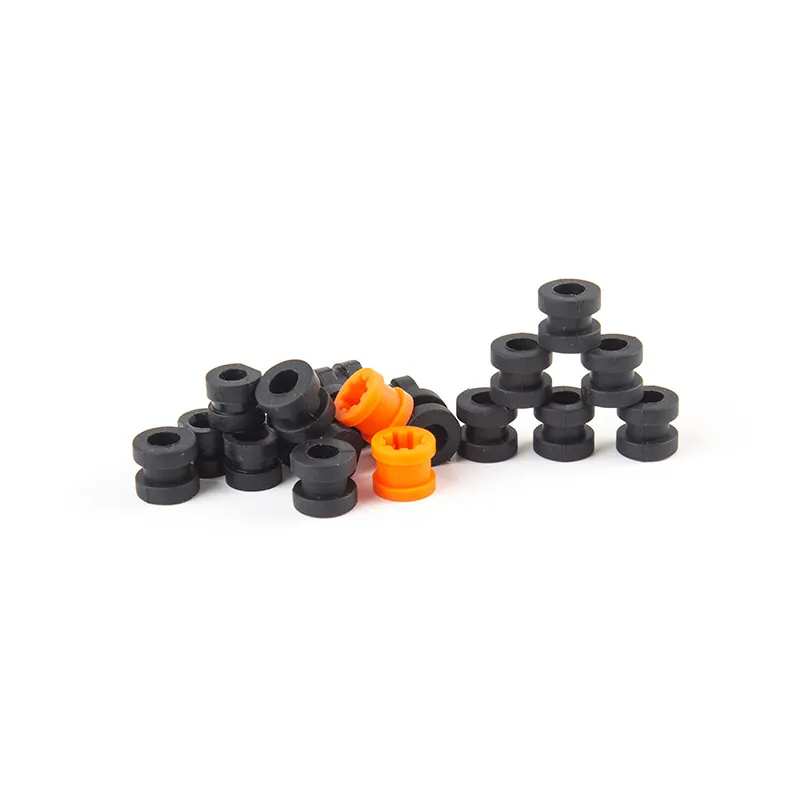
Tuned silicone dampers and isolators for precision equipment.
Custom Silicone Parts
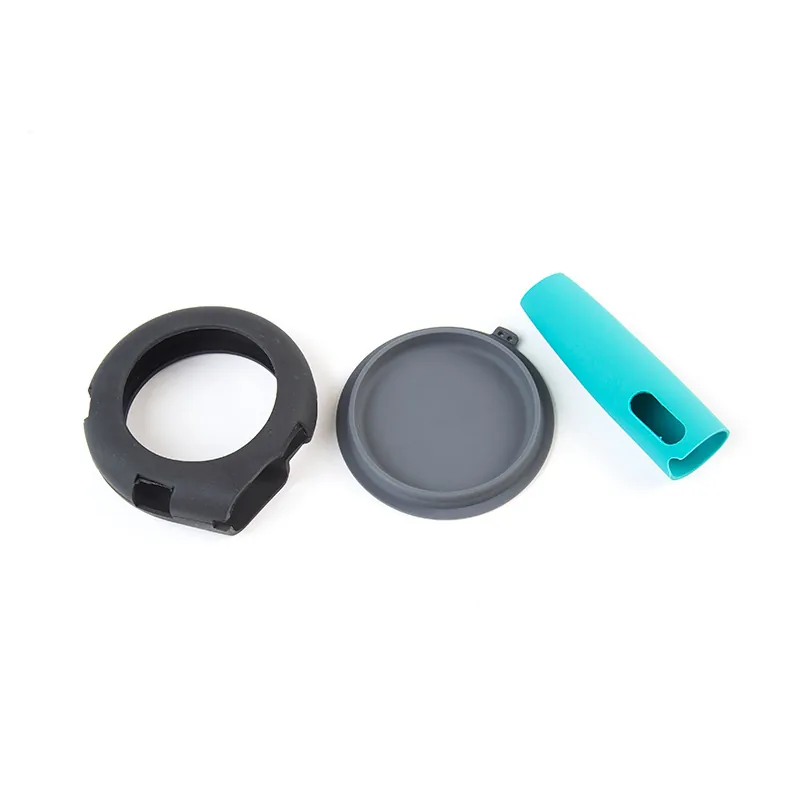
Fully bespoke silicone components to your drawing or sample.
Robotics
Sealing, damping, protection and cable management for robots.
Related Industries
Robotics
Sealing, damping and protective components for industrial, collaborative and service robots.
Industrial Automation
Seals, gaskets and moulded parts for actuators, conveyors and machine frames.
Electronics
Enclosure sealing, insulation and interface components for controllers and instruments.
Drones & UAV
Waterproof sealing and vibration isolation for airframes and payloads.