Components moulded in the compounds we run
Material Selection Drives Everything
A sealing part that fails in service has almost always failed because of the material, not the geometry. Before we quote a component we establish what it has to survive: temperature range, contact chemicals, UV and ozone exposure, compression set budget, flexing, and whether it touches food, skin or drinking water.
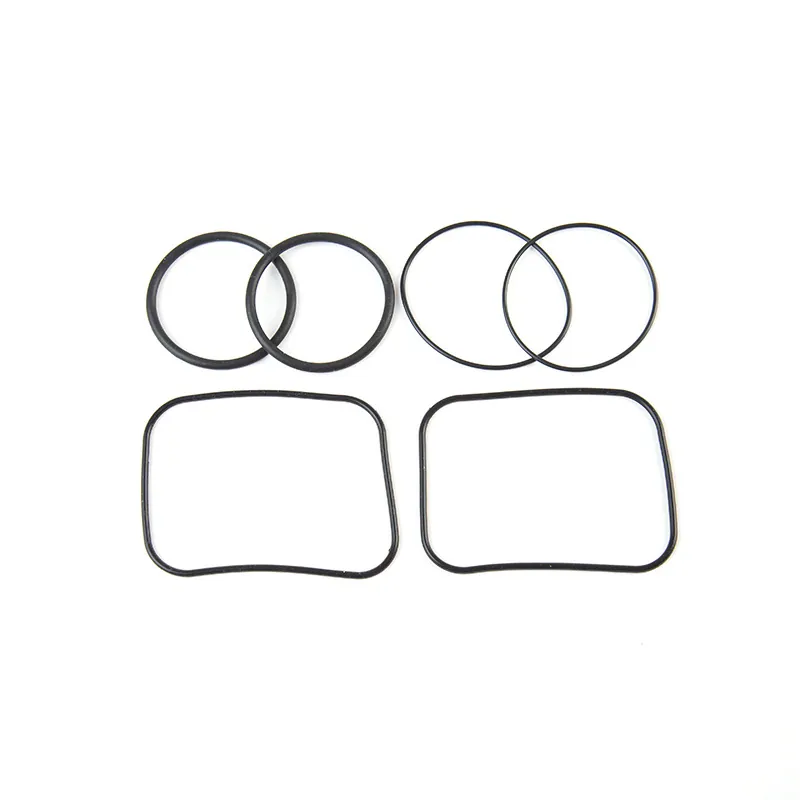
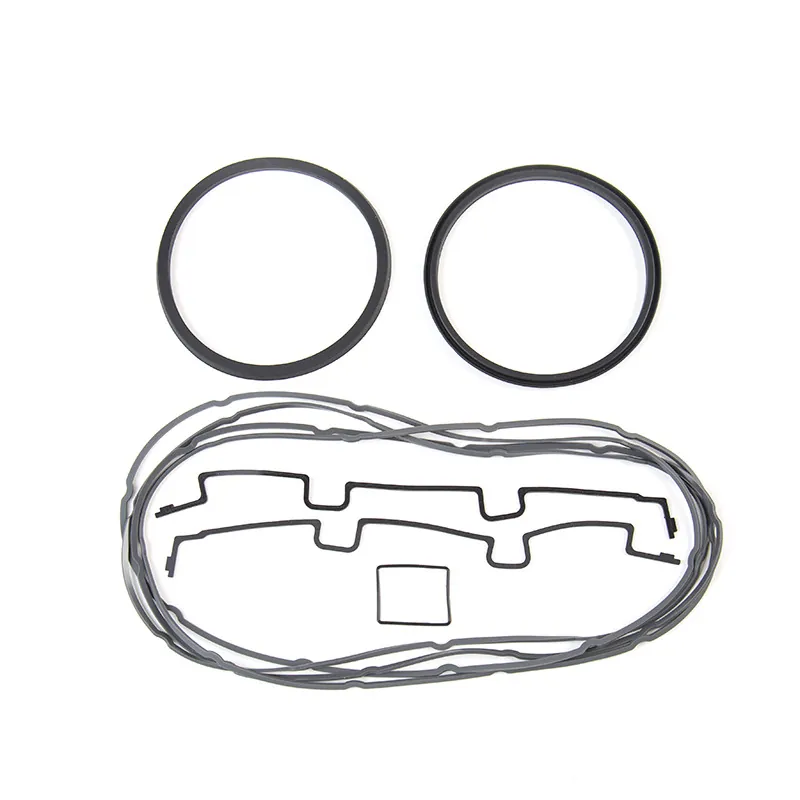
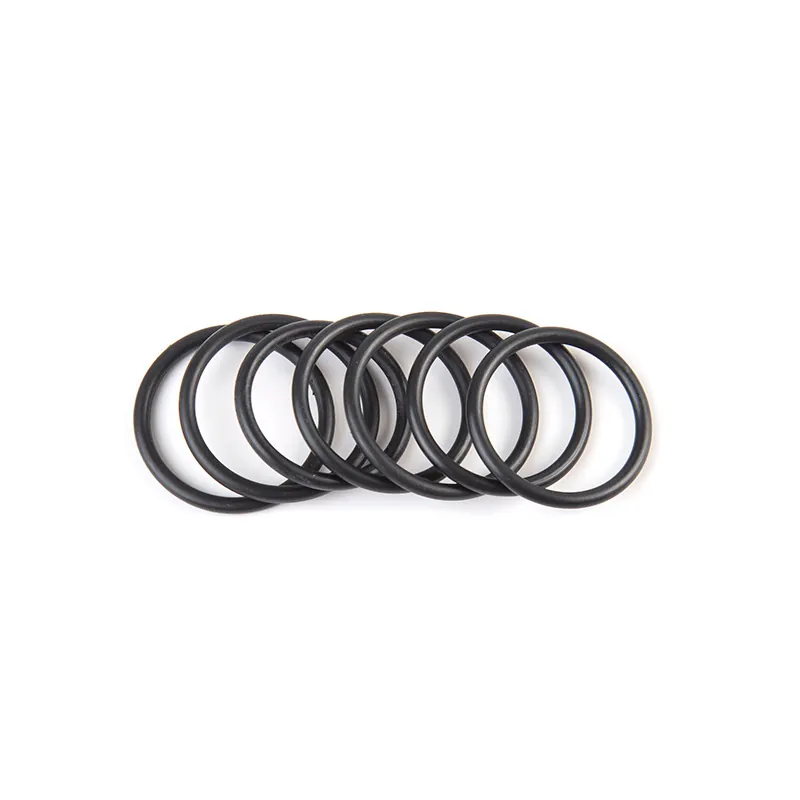
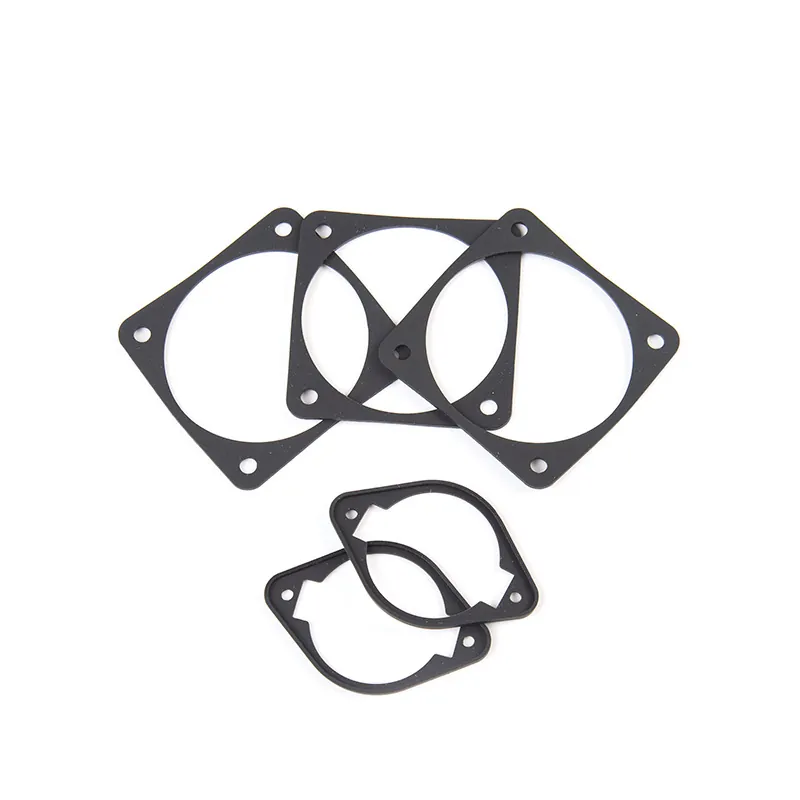
We work with Silicone (HTV / LSR), EPDM, NBR, FKM (Viton), NR, SBR, CR. The four families below cover the large majority of programmes. Where a compound needs to be developed for a specific condition we say so at quote stage.
Material Comparison
| Material | Temperature range | Best at | Avoid when |
|---|---|---|---|
| Silicone (HTV / LSR) | -60 to +230 C | Wide temperature range, UV and ozone resistance, food and skin contact, compression set at temperature, electrical insulation | Contact with concentrated oils, fuels and some solvents; high tear strength demand |
| EPDM | -50 to +150 C | Water, steam, hot water, weather and ozone resistance; outdoor and washdown applications where cost matters | Contact with mineral oils, fuels and hydrocarbon solvents |
| NBR (Nitrile) | -40 to +120 C | Mineral oils, greases, fuels and hydraulic fluid resistance; general industrial sealing | Ozone, weathering and ketone/ester solvents |
| FKM (Viton) | -20 to +230 C | Aggressive chemicals, fuels, high temperature where silicone is unsuitable | Hot water, steam, low-temperature service, and cost-sensitive parts |
Choosing Between Silicone, EPDM, NBR and FKM
- Temperature first. If the part sees sustained temperatures above 150 C, silicone or FKM are the only realistic options. Below freezing, silicone and EPDM stay flexible; NBR does not.
- Then the fluid. Hydrocarbon oils and fuels point to NBR or FKM. Water, steam and weather point to EPDM or silicone. Aggressive solvents point to FKM.
- Then compression set. If the seal must hold a load after thousands of heat cycles, silicone and FKM hold up far better than NBR or EPDM.
- Then cost. EPDM and NBR are the most economical. Silicone sits in the middle. FKM is the most expensive and should be justified by a specific chemical or temperature requirement.
The practical version of this material question is written up in our guide How to Choose Silicone Rubber Hardness for Your Application.
For a robot joint the choice narrows further than this table suggests. Ozone, compression set under continuous articulation, and the seal being worked by the motion itself, remove NBR and EPDM from most joint applications and leave the decision between silicone grades. That is set out in robotics-grade sealing materials.
Hardness and Other Specifications
| Parameter | Range we work to | Notes |
|---|---|---|
| Hardness | 20-80 Shore A | Lower hardness gives better sealing at low compression; higher hardness resists extrusion and compression set. |
| Operating temperature | -60 C to +230 C | Depends on compound. Continuous operating temperature is always lower than the peak material rating. |
| Tolerance | +/-0.05 mm (moulded critical dimensions) | Tighter dimensional control is achievable but affects tooling cost and cycle time. |
| Colour | Natural, black, or matched to a supplied sample | Colour matching is validated against a physical sample, not a screen. |
| Surface finish | Smooth, matte, textured, or as-moulded | Cosmetic parts need to be specified at quote stage. |
| Material evidence | Compound sheet and inspection record per batch | Available for programmes that require traceability. |
Hardness, Tolerance and Temperature — Why We Quote Rather Than Publish
We publish ranges, not fixed values, because the correct number depends on your part. A 30 Shore A gasket for a sealed enclosure and a 70 Shore A gasket for the same enclosure are different components with different tooling. When you send a drawing we return a specific recommendation with the reasoning attached. That review is the same one we run on every custom rubber component enquiry, whether the part is a gasket, a damper or a grip.
Material Compliance and Third-Party Evidence
The silicone compound we mould carries eleven third-party SGS test reports, all Pass - EU RoHS 2015/863, REACH SVHC, seventeen phthalates, eighteen PAH parameters, halogen content, US FDA 21 CFR 177.2600, LFGB Section 30 and 31, and GB 4806.16-2025 including overall migration, heavy metal as Pb and volatile substance.
| What it covers | Standard | Result |
|---|---|---|
| Restricted substances | EU RoHS (EU) 2015/863 - ten substances | All not detected |
| SVHC screening | REACH Candidate List, 0.1% w/w threshold | None at or above threshold |
| Phthalates | EN 14372 - seventeen phthalates | All not detected |
| PAHs | AfPS GS 2019:01 PAK - eighteen parameters | All not detected |
| Halogen | EN 14582 - F, Cl, Br, I | All not detected |
| Food-contact: extractives | US FDA 21 CFR 177.2600 | Pass |
| Food-contact: sensorial and bisphenols | LFGB Section 30 and 31 with BfR | Pass |
| Food-contact: China | GB 4806.16-2025 | Pass |
These are reports on the compound, not on a finished moulded part, and a part's compliance depends on the grade, the colour and the process. Tell us the standard your market requires at enquiry stage and we will match the grade and send the report numbers that cover it - see the full evidence on the material compliance page.