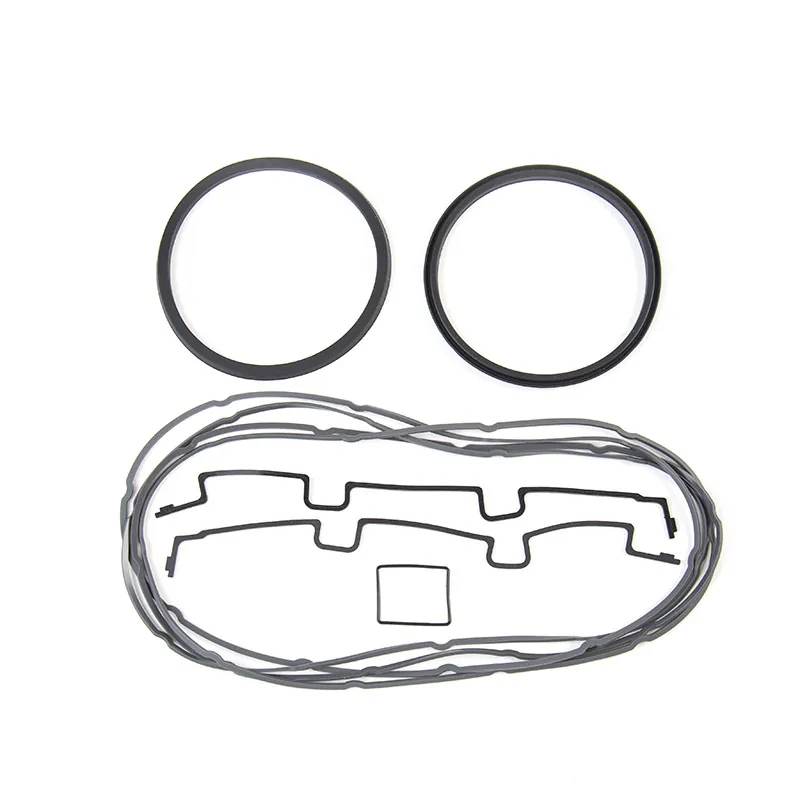
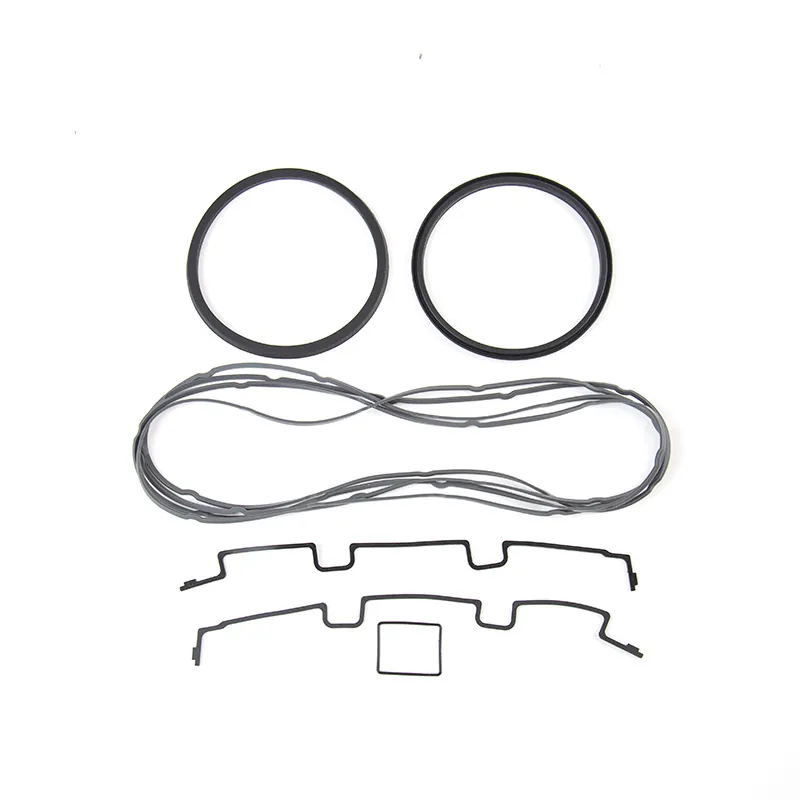
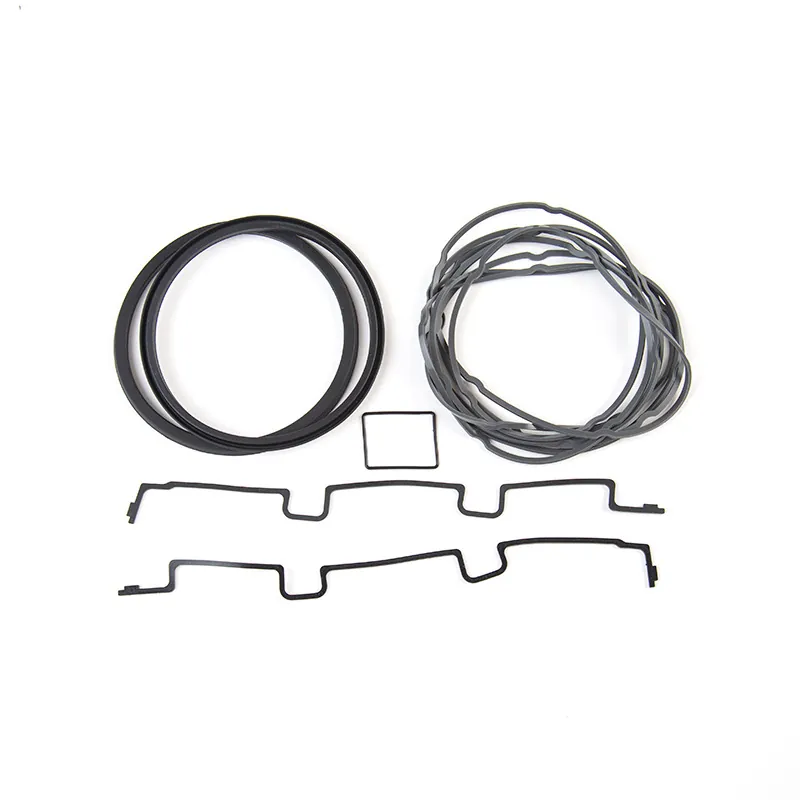
What Is a Rubber Seal?
Rubber seals fail for one reason more often than any other: the wrong elastomer for the fluid. A perfectly moulded NBR seal will swell and soften in a solvent that silicone shrugs off, and a silicone seal will degrade in oil that NBR handles comfortably. We mould custom rubber seals in EPDM, NBR, FKM (Viton), NR, SBR and CR, and the first engineering conversation is always about the service environment rather than the part number.
Applications
- Rotating and static shaft sealing
- Hydraulic, pneumatic and coolant circuit sealing
- Pump, valve and compressor sealing
- Industrial machinery and gearbox sealing
- Outdoor and washdown equipment sealing
The Engineering Problem
Seal failure presents as leakage, but the cause is usually one of four things: chemical attack on the elastomer, compression set that removes the sealing force, extrusion of a soft compound through a gap under pressure, or abrasive damage from contamination in the sealing zone. Each has a different fix, and applying a harder compound to a chemical problem simply moves the failure.
Product Features
- Compound selected against your actual contact fluid list
- Hardness matched to pressure and gap to resist extrusion
- Compression set evaluated for the temperature and cycle profile
- Standard and non-standard sealing profiles moulded, not cut from cord
- Low-friction compounds available for dynamic seals
- Sealing faces kept free of flash lines
- Batch material and inspection records
Material Options
| Material | When we would choose it |
|---|---|
| NBR (Nitrile) | Mineral oils, greases, fuels and hydraulic fluids; the default for general industrial sealing |
| EPDM | Water, steam, hot water, weather and ozone; washdown and outdoor equipment |
| FKM (Viton) | Aggressive chemicals, fuels and high temperature where silicone is unsuitable |
| Silicone | Wide temperature range and electrical insulation; not for hydrocarbon oil contact |
| NR / SBR / CR | Specific mechanical or cost-driven applications; quoted case by case |
Material Properties
| Property | Typical value / comment |
|---|---|
| Compression set | The most important property for a static seal. Silicone and FKM hold load better at temperature than NBR or EPDM |
| Fluid resistance | Determined by elastomer family. We evaluate against your specific fluid list |
| Hardness | Typically 50-80 Shore A for pressurised sealing; lower for low-pressure static seals |
| Tensile & tear strength | Selected for demoulding, assembly and extrusion resistance |
| Low-temperature flexibility | Silicone and EPDM remain flexible below freezing; NBR does not |
Specifications
| Parameter | What we work to |
|---|---|
| Dimensions | Moulded to drawing; standard and non-standard profiles |
| Tolerance | ±0.05 mm on critical moulded dimensions under controlled conditions |
| Operating temperature | NBR -40 to +120 C; EPDM -50 to +150 C; FKM -20 to +230 C; silicone -60 to +230 C |
| Hardness | 20-80 Shore A |
| Colour | Black standard; other colours to sample |
| Surface finish | As-moulded, smooth or with defined sealing-face finish |
| Waterproof / IP | Seal design support for pressure and IP targets |
| Chemical resistance | Compound matched to your fluid list — this drives the material choice |
Production Process
- Fluid list, temperature range and pressure conditions collected
- Elastomer family shortlisted with the reasoning stated
- Hardness and geometry reviewed for extrusion and gap conditions
- Mould designed and built
- First-article samples for fit, function and leak testing
- Production with locked parameters and in-process checks
- Inspection records and material sheet issued with shipment
Customization
- Non-standard sealing profiles that cannot be produced from standard cord stock
- Bonded metal or plastic carriers for press-fit installation
- Multiple hardness zones in one part where the seal needs a soft lip and a stiff body
- Colour coding for line-side identification
- Low-friction surface treatment for dynamic applications
- Kitted assemblies ready to fit
Tooling & Prototyping
Seals are compression or LSR moulded on tooling we design in-house. Where the profile is non-standard, the mould design is what makes the seal possible — this is the main reason customers come to us rather than cutting from standard cord. First-article samples are produced before production, and tooling cost is refundable against volume orders.
MOQ, Quality Control & Packaging
| Item | How it is handled |
|---|---|
| MOQ | Quoted per project against part size, tooling and compound. |
| Quality control | Material verification, in-process parameter checks, dimensional inspection and hardness testing |
| Packaging | Bulk, bagged, trayed or kitted |
| Documentation | Material sheet, dimensional and hardness records |
Material Compliance
The silicone compound we mould carries third-party SGS reports covering EU RoHS 2015/863, REACH SVHC, phthalates, PAHs, halogen, US FDA 21 CFR 177.2600, LFGB Section 30 and 31, and GB 4806.16-2025 - all Pass. A part's compliance depends on the compound grade, the colour and the process, so the grade is matched to your requirement at quotation stage. See the material compliance page for the report numbers.
Rubber Seals — Frequently Asked Questions
NBR, almost always. Silicone swells and loses strength in mineral oil and hydrocarbon fuels. Silicone is chosen where the temperature range is wide, for electrical insulation, or for water and weather rather than oil exposure. Where both high temperature and oil resistance are needed, FKM is usually the answer.
Both resist UV and ozone well. EPDM is generally more economical for water, steam and weather. Silicone is preferred where the temperature range is wider or where compression set at temperature is critical.
Compression set — the elastomer loses its ability to spring back after heat cycles, so the sealing force disappears. It is usually solved with a compound that has better compression-set resistance, or by rebuilding the gland to allow more initial compression.
Yes, and this is a large part of what we do. Moulding rather than cutting from cord opens up profiles and integrated features that standard cord stock cannot provide.
Give us continuous operating temperature, peak temperature and duration, system pressure, and the gap the seal must bridge. Those four figures usually determine both compound and hardness.
Material sheets and batch records are available. Where a specific third-party certification is required, raise it at RFQ stage — we will confirm honestly whether we can provide it.
Related Products
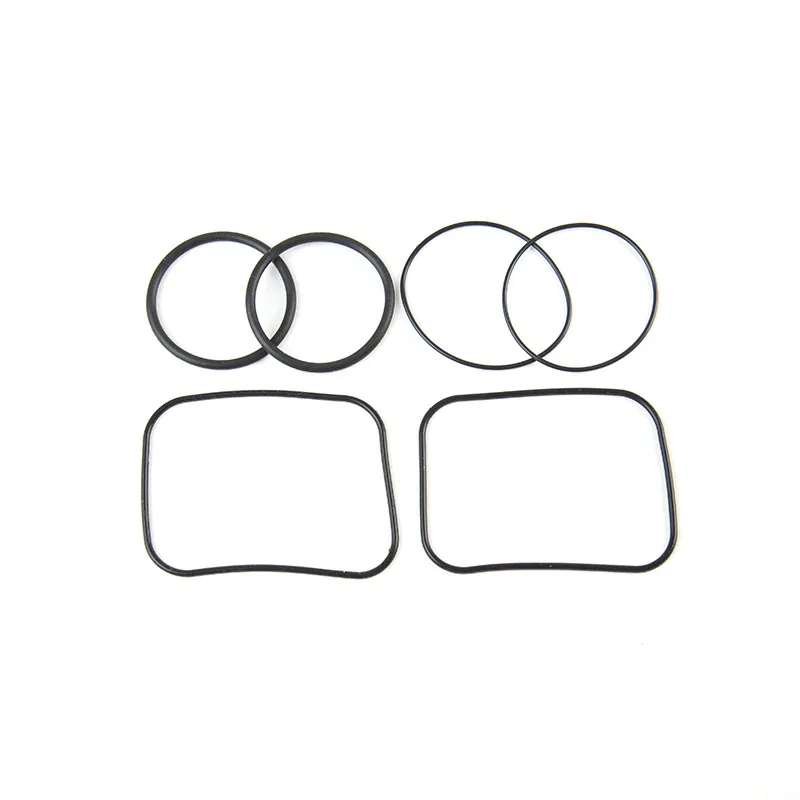
Silicone Gaskets
Waterproof and high-temperature gaskets for enclosure and flange sealing.
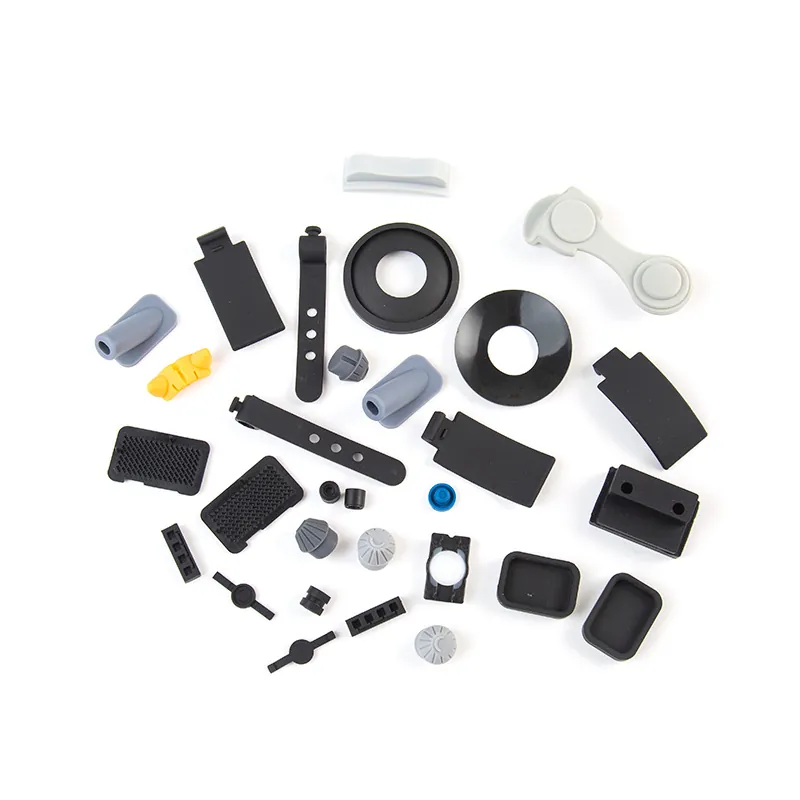
Custom Rubber Parts
Bespoke rubber components in EPDM, NBR, FKM, NR, SBR and CR.
Compression Molding
The primary process for solid rubber seals, thick sections and low-to-mid volumes.
Related Industries
Robotics
Sealing, damping and protective components for industrial, collaborative and service robots.
Industrial Automation
Seals, gaskets and moulded parts for actuators, conveyors and machine frames.
Electronics
Enclosure sealing, insulation and interface components for controllers and instruments.
Drones & UAV
Waterproof sealing and vibration isolation for airframes and payloads.
Related Case Study
Silicone Components for a Humanoid Robot Finger
Contact and sealing parts on an articulated finger, built for wear and consistent tactile behaviour.
Gripper Protective Sleeves for Robot Fingers
Sleeves that sit over the robot fingers, supplied for laundry handling and parcel sorting.