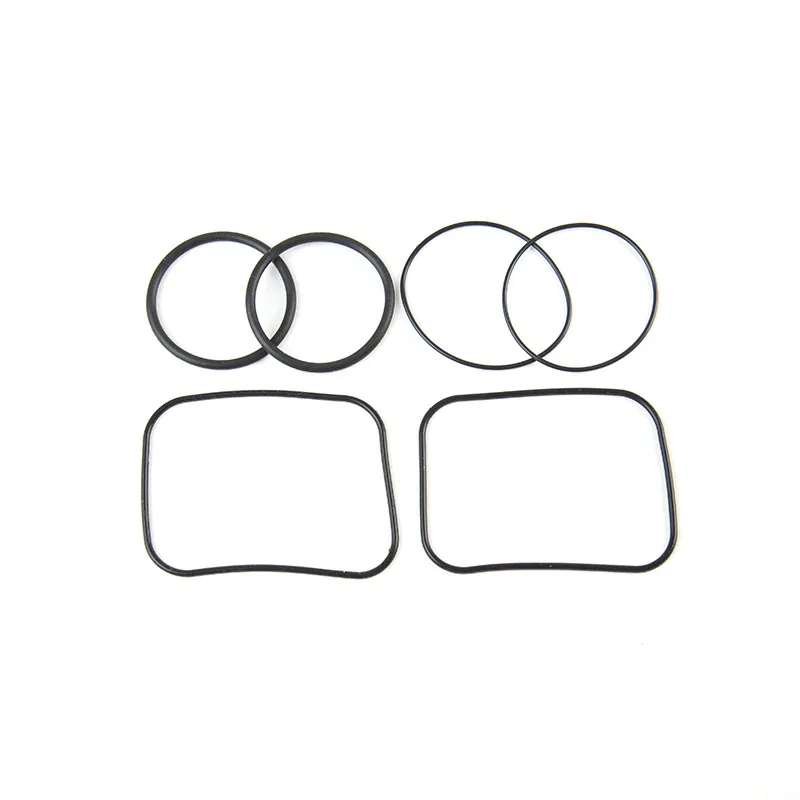
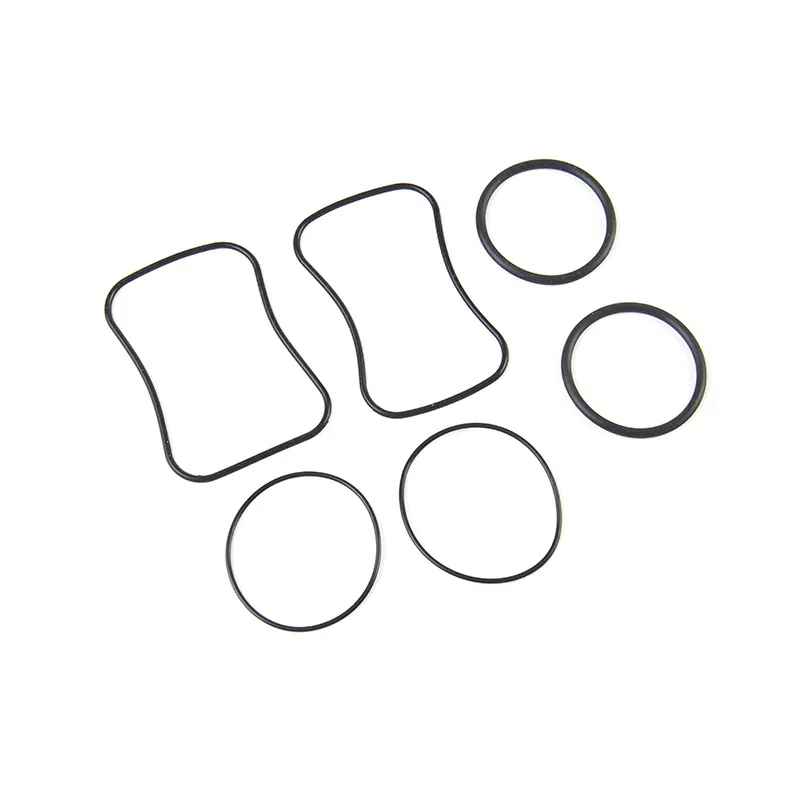
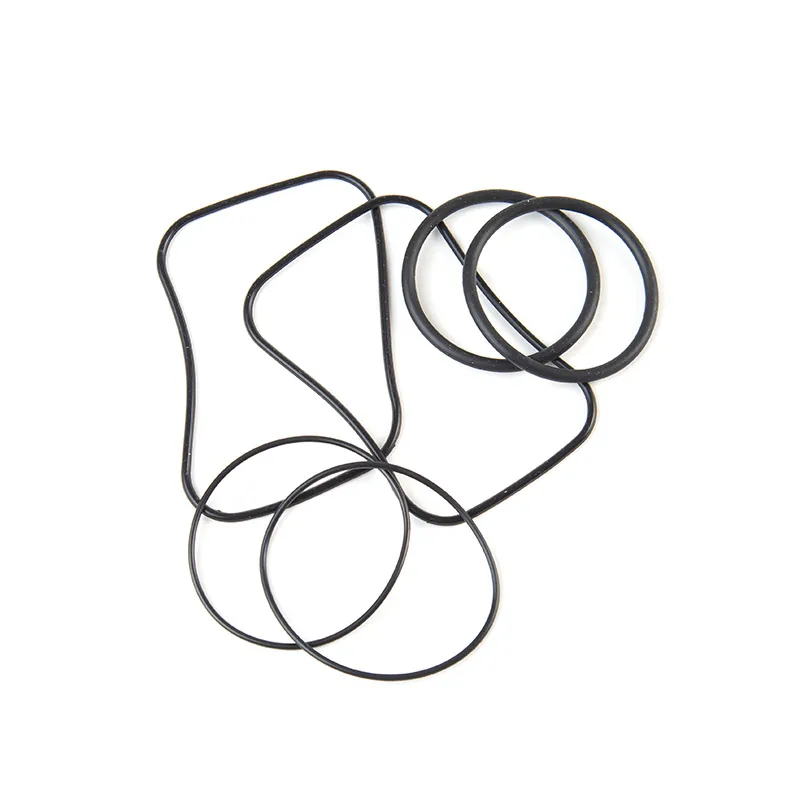
What Is a Silicone Gasket?
A silicone gasket does one job: it deforms under compression and keeps something out, or keeps something in. Everything that decides whether it works — the sealing face geometry, the compression percentage, the compound and the tolerance on the gland — is engineering, not catalogue selection. We mould custom gaskets from customer drawings for enclosure, panel, flange, sensor and connector sealing, in silicone and in EPDM, NBR and FKM where the temperature or chemistry rules silicone out.
Applications
- Enclosure, cabinet and control-box sealing for wet, washdown and dust-exposed equipment
- Panel-mount and flange gaskets for sensors, connectors and fittings
- Electronic housing seals for controllers, instruments and outdoor equipment
- Robot joint, wrist and end-effector sealing against dust and coolant
- Lighting, pump and compressor housings
The Engineering Problem
Most gasket failures we are asked to fix are not material failures. They are compression failures: the gland does not hold the gasket in the right compression band, the gasket takes a permanent set after the first heat cycle, or the sealing face has a scratch, a flash line or a sink mark that gives water a path through. A gasket that leaks is usually a geometry problem wearing a material problem's clothes.
Product Features
- Compression geometry reviewed against your gland before tooling is cut
- Compound selected for the actual service temperature, not the peak rating
- Sealing faces produced without flash lines crossing the seal path
- Hardness chosen to match your bolt load and gap tolerance
- Flat, profiled, tubular and custom cross-sections
- Carrier and non-carrier designs; gaskets supplied loose or fitted
- Dimensional and hardness records shipped with the parts
Material Options
| Material | When we would choose it |
|---|---|
| Silicone (HTV) | Default for wide temperature range, UV and ozone resistance, and food or skin contact |
| Liquid silicone rubber (LSR) | Thin-wall and high-precision sealing faces, long fatigue life |
| EPDM | Hot water, steam, washdown and outdoor weather exposure; most economical for these conditions |
| NBR | Mineral oil, grease and fuel contact; general industrial sealing |
| FKM (Viton) | Aggressive chemicals, fuels and sustained high temperature |
Material Properties
| Property | Typical value / comment |
|---|---|
| Hardness | Typically 30-70 Shore A. Softer seals at lower compression; harder resists extrusion |
| Compression set | Compound-dependent. Critical where the gasket must hold load after repeated heat cycles |
| Tensile strength | Selected for the demoulding and handling loads of your part geometry |
| Elongation at break | Higher elongation tolerates part distortion in assembly |
| Tear resistance | Important for thin walls, sharp corners and assembly by hand |
Specifications
| Parameter | What we work to |
|---|---|
| Dimensions | Moulded to your drawing; no catalogue size limit |
| Tolerance | ±0.05 mm on critical moulded dimensions under controlled conditions; wider bands on non-critical features |
| Operating temperature | Silicone -60 to +230 C; EPDM -50 to +150 C; NBR -40 to +120 C; FKM -20 to +230 C (compound dependent) |
| Hardness | 20-80 Shore A |
| Colour | Black, natural/translucent, or matched to a supplied physical sample |
| Surface finish | As-moulded, smooth, matte or textured to specification |
| Waterproof / sealing | Sealing designed around your gland geometry, compression and cleaning regime |
| Chemical resistance | Compound selected against your contact fluid list |
Production Process
- Drawing, sample or photograph received and reviewed by an engineer
- Sealing geometry and compression band assessed; comments issued
- Compound proposed with the reasoning stated
- Mould designed and, on approval, manufactured
- First-article samples produced for fit, function and sealing tests
- Process parameters locked; production with in-process inspection
- Dimensional, hardness and visual records issued with each shipment
Customization
- Cross-section profile: flat, rectangular, O-profile, D-profile, tubular, custom
- Hardness by application, with different hardness in different regions where needed
- Colour matching against a physical sample
- Adhesive backing or carrier plates
- Printed or laser-marked identification
- Kitted with fasteners or supplied pre-assembled to your housing
Tooling & Prototyping
Gaskets are moulded on tooling we design and build ourselves, which is why we can shape the sealing face and control flash placement rather than accepting whatever the tool gives. First-article samples are produced before mass production so the compression behaviour can be verified on your assembly. Tooling cost is refundable against volume production orders.
MOQ, Quality Control & Packaging
| Item | How it is handled |
|---|---|
| MOQ | Quoted per project. It depends on the part size, the tooling and the compound — a blanket figure would be misleading. Tooling refundability means small first orders are usually workable. |
| Quality control | Incoming material verification, in-process parameter checks, dimensional inspection of critical characteristics and hardness testing |
| Packaging | Bulk, bagged, trayed or kitted to your line requirement |
| Documentation | Dimensional and hardness records with shipment; material sheet on request |
Material Compliance
The silicone compound we mould carries third-party SGS reports covering EU RoHS 2015/863, REACH SVHC, phthalates, PAHs, halogen, US FDA 21 CFR 177.2600, LFGB Section 30 and 31, and GB 4806.16-2025 - all Pass. A part's compliance depends on the compound grade, the colour and the process, so the grade is matched to your requirement at quotation stage. See the material compliance page for the report numbers.
Silicone Gaskets — Frequently Asked Questions
For most silicone enclosure gaskets, 20-30% compression on the gasket thickness is the working range, but the correct figure depends on the compound, the gap tolerance in your assembly and whether the seal is static or sees movement. Send us the gland dimensions and we will state a figure and the reasoning.
Both resist UV and ozone. EPDM is usually the more economical choice for water, steam and weather exposure. Silicone is preferred when the temperature range is wider, when skin or food contact is involved, or when compression set at temperature matters more than cost.
Yes. Send a sample and we will measure the hardness and propose a compound that matches it. We will tell you if the original hardness was contributing to the failure.
Yes, for assembly convenience. Note that adhesive backing is for positioning only — it is not a sealing mechanism, and the seal still depends on compression.
Flash placement is controlled in mould design so the split line does not cross the sealing face. Deflashing is part of production, not an optional extra.
Yes. First-article samples are produced before mass production, shipped with inspection data, so you can test fit and function on the real assembly.
Related Products
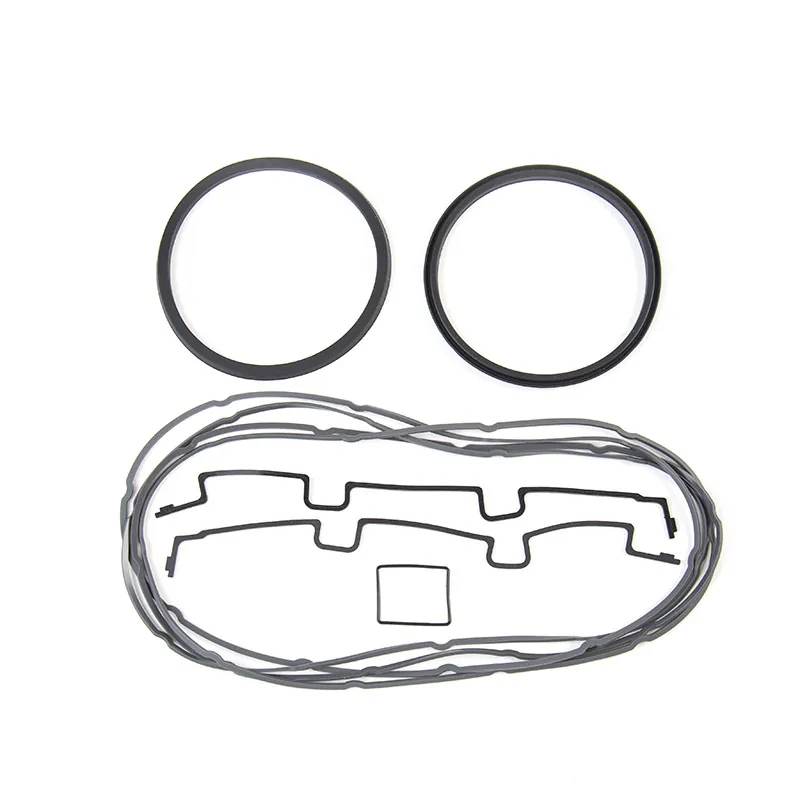
Rubber Seals
Custom rubber seals in EPDM, NBR and FKM for water, oil and chemical resistance.
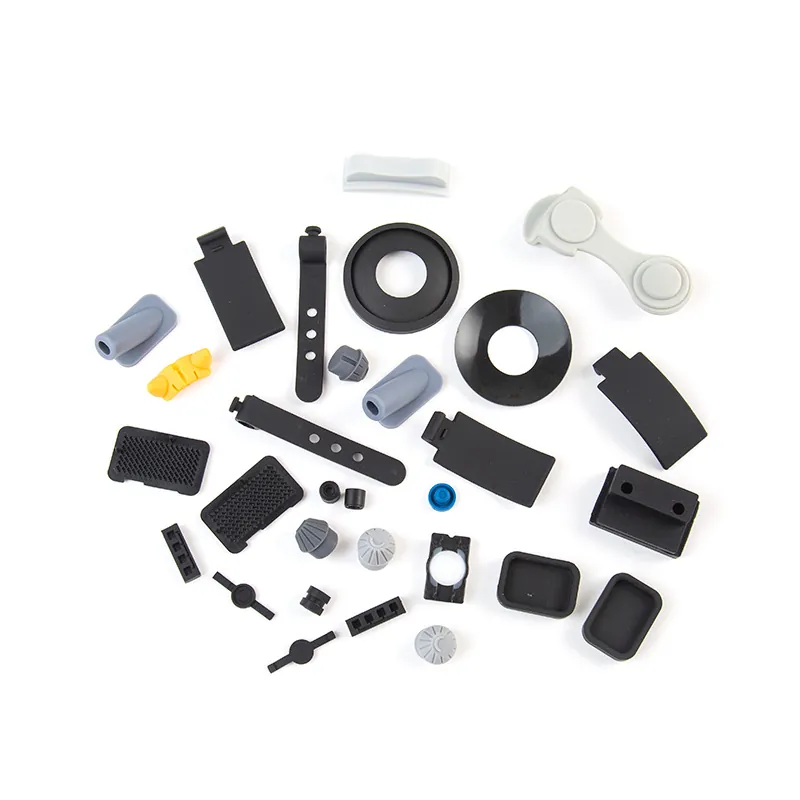
Custom Rubber Parts
Bespoke rubber components to your drawing, 3D file or physical sample.
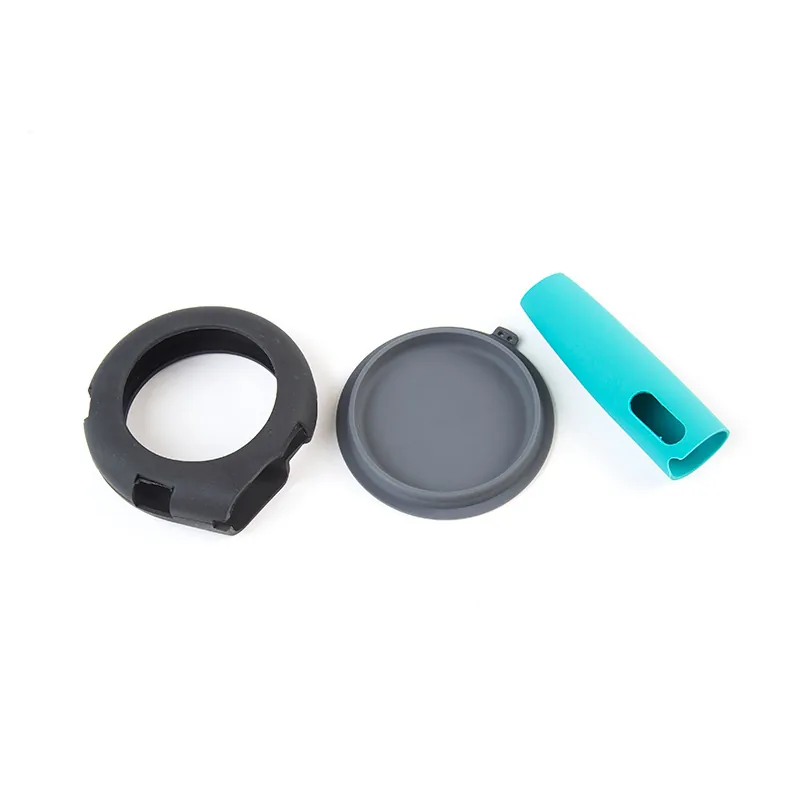
Custom Silicone Parts
Fully custom silicone components including non-standard sealing profiles.
Related Industries
Robotics
Sealing, damping and protective components for industrial, collaborative and service robots.
Industrial Automation
Seals, gaskets and moulded parts for actuators, conveyors and machine frames.
Electronics
Enclosure sealing, insulation and interface components for controllers and instruments.
Drones & UAV
Waterproof sealing and vibration isolation for airframes and payloads.
Related Case Study
Silicone Components for a Humanoid Robot Finger
Contact and sealing parts on an articulated finger, built for wear and consistent tactile behaviour.
Gripper Protective Sleeves for Robot Fingers
Sleeves that sit over the robot fingers, supplied for laundry handling and parcel sorting.