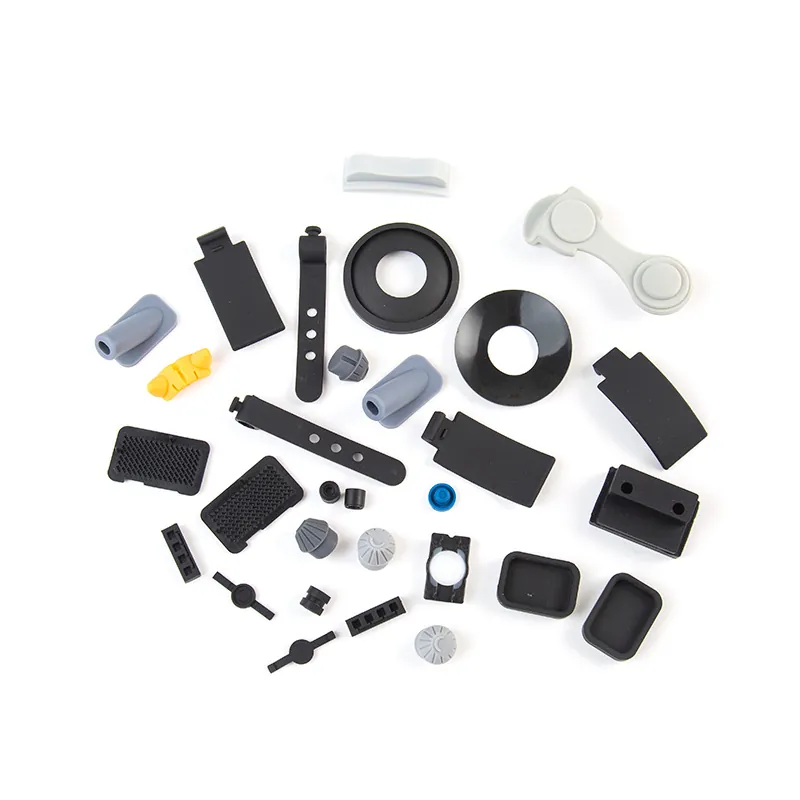
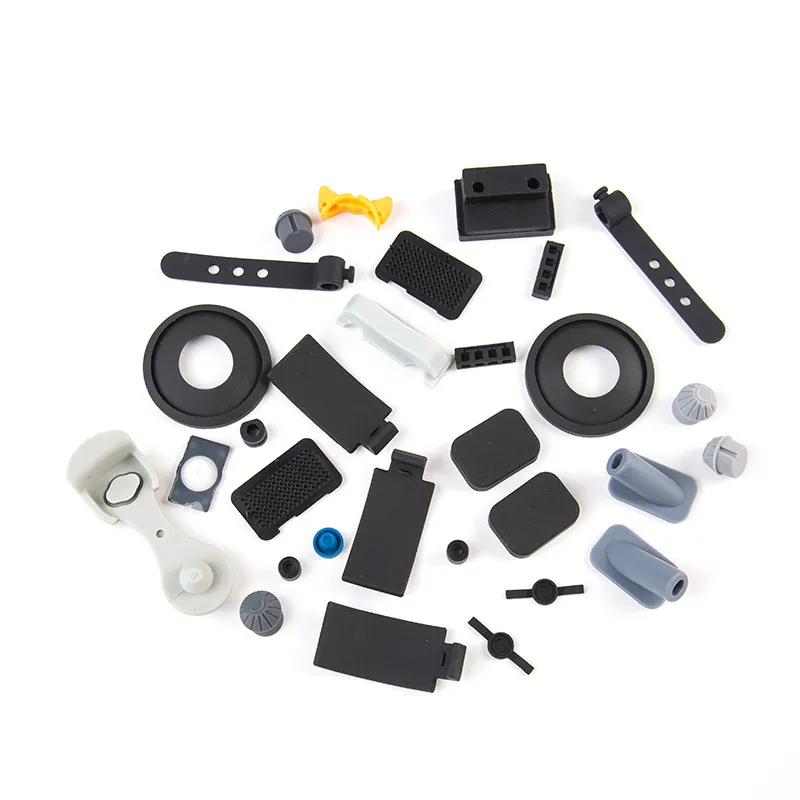
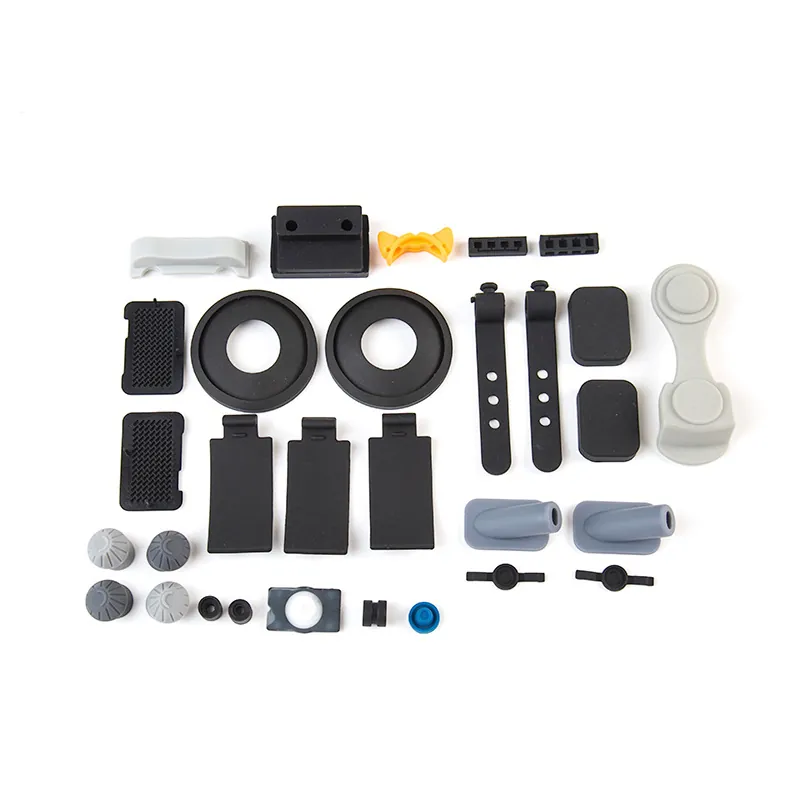
What Are Custom Rubber Parts?
Rubber is not one material. The difference between a component that lasts ten years and one that fails in six months is almost always the elastomer choice, and the elastomer choice follows from the service environment rather than from the drawing. We mould custom rubber parts across the common industrial elastomers and we spend the first part of every project establishing what the part has to survive: temperature, fluids, ozone, abrasion, flexing and compression set.
Applications
- Seals, gaskets and sealing profiles
- Damping, isolation and anti-vibration parts
- Feet, pads, bumpers and wear components
- Ducting, sleeves and protective profiles
- Industrial machinery and equipment components
The Engineering Problem
Rubber part failures are typically environment-driven. NBR swells in the wrong solvent; EPDM degrades in oil; natural rubber cracks under ozone; a compound with poor compression-set resistance stops sealing after heat cycles. Because these failures look identical in the field, the diagnostic step is always the same: establish what the part was exposed to, then choose a compound that survives it.
Product Features
- Elastomer shortlisted against the actual service environment
- Hardness and profile matched to mechanical and sealing duty
- Compression set evaluated for the temperature and cycle profile
- Standard and non-standard profiles moulded, not cut
- Bonded rubber-to-metal and rubber-to-plastic parts
- Production with documented parameters and inspection records
- Tooling designed in-house and refundable against volume
Material Options
| Material | When we would choose it |
|---|---|
| EPDM | Water, steam, hot water, weather and ozone resistance; outdoor and washdown applications |
| NBR (Nitrile) | Mineral oils, greases, fuels and hydraulic fluids; general industrial rubber parts |
| FKM (Viton) | Aggressive chemicals, fuels and sustained high temperature |
| NR (Natural) | High resilience and low hysteresis for dynamic applications, where weather resistance is not critical |
| SBR | General purpose and cost-driven moulded parts |
| CR (Neoprene) | Moderate oil and weather resistance, flame-retardant options |
Material Properties
| Property | Typical value / comment |
|---|---|
| Compression set | Decides whether a static seal keeps sealing after heat cycles |
| Fluid resistance | Determined by elastomer family and confirmed against your fluid list |
| Hardness | Typically 40-80 Shore A for industrial parts |
| Tensile & tear strength | Selected for the mechanical duty and demoulding loads |
| Weathering & ozone | EPDM and CR perform well; natural rubber does not |
Specifications
| Parameter | What we work to |
|---|---|
| Dimensions | Moulded to drawing or reverse-engineered from a sample |
| Tolerance | ±0.05 mm on critical moulded dimensions under controlled conditions |
| Operating temperature | NR/SBR -40 to +100 C; NBR -40 to +120 C; CR -40 to +120 C; EPDM -50 to +150 C; FKM -20 to +230 C |
| Hardness | 20-80 Shore A |
| Colour | Black standard; other colours to sample |
| Surface finish | As-moulded, smooth, matte or textured |
| Waterproof / IP | Sealing features designed in where applicable |
| Chemical resistance | Compound matched to your contact fluid list |
Production Process
- Service environment established: temperature, fluids, ozone, abrasion, flexing
- Elastomer family shortlisted with the reasoning stated
- Profile and hardness reviewed against mechanical and sealing duty
- Mould designed and built in-house
- First-article samples for fit, function and durability testing
- Production with locked parameters and in-process inspection
- Dimensional and hardness records issued with shipment
Customization
- Compound development for specific service conditions where needed
- Rubber-to-metal and rubber-to-plastic bonding
- Colour matching against a physical sample
- Flame-retardant grades quoted case by case
- Secondary operations: deflashing, post-curing, marking, sub-assembly
- Packaging and kitting to your line requirement
Tooling & Prototyping
Tooling is designed and manufactured by us. For rubber parts, the mould design also controls shrinkage compensation, which is compound-specific — another reason the tool and the material decision cannot be separated. Tooling cost is refundable against volume production orders.
MOQ, Quality Control & Packaging
| Item | How it is handled |
|---|---|
| MOQ | Quoted per project against part size, tooling and compound. |
| Quality control | Material verification, in-process parameter checks, dimensional inspection and hardness testing |
| Packaging | Bulk, bagged, trayed or kitted |
| Documentation | Dimensional and hardness records; material sheet on request |
Material Compliance
The silicone compound we mould carries third-party SGS reports covering EU RoHS 2015/863, REACH SVHC, phthalates, PAHs, halogen, US FDA 21 CFR 177.2600, LFGB Section 30 and 31, and GB 4806.16-2025 - all Pass. A part's compliance depends on the compound grade, the colour and the process, so the grade is matched to your requirement at quotation stage. See the material compliance page for the report numbers.
Custom Rubber Parts — Frequently Asked Questions
EPDM is usually the answer for water, steam and weather exposure, and it is economical. CR (Neoprene) is an alternative where some oil resistance is also needed. Natural rubber should be avoided outdoors because it cracks under ozone.
If the part contacts mineral oil or grease, NBR. If it contacts water, steam or weather, EPDM. Specifying the wrong one is the single most common cause of premature rubber failure we see.
Yes. Rubber-to-metal and rubber-to-plastic bonded parts are produced as sub-assemblies ready to fit. The bonding surface preparation is specified at drawing review.
Each compound shrinks differently on cooling, so the mould must compensate for the specific material. This is why changing compound after tooling can require tooling changes — we flag it before you commit.
Certain grades are available and quoted case by case. Tell us the standard you need to meet at RFQ stage rather than assuming a grade will satisfy it.
The process and tooling are similar; the material engineering is different. Silicone parts are chosen for temperature range, weather resistance, insulation and clean contact. Rubber parts are chosen for oil, water and mechanical duty at lower cost. Many projects start on one page and end on the other.
Related Products
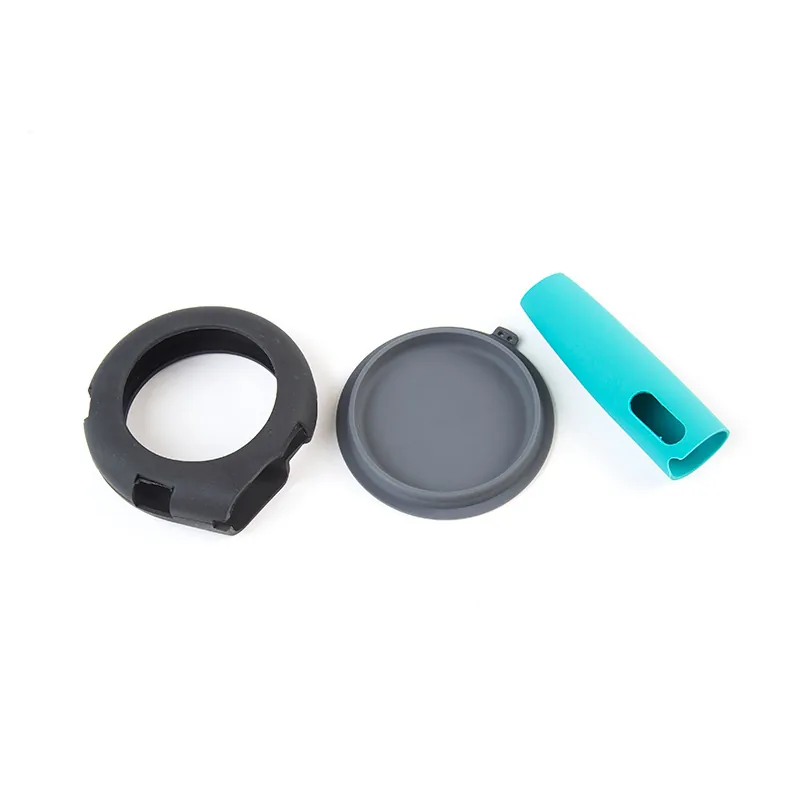
Custom Silicone Parts
Fully bespoke silicone components for OEM applications.
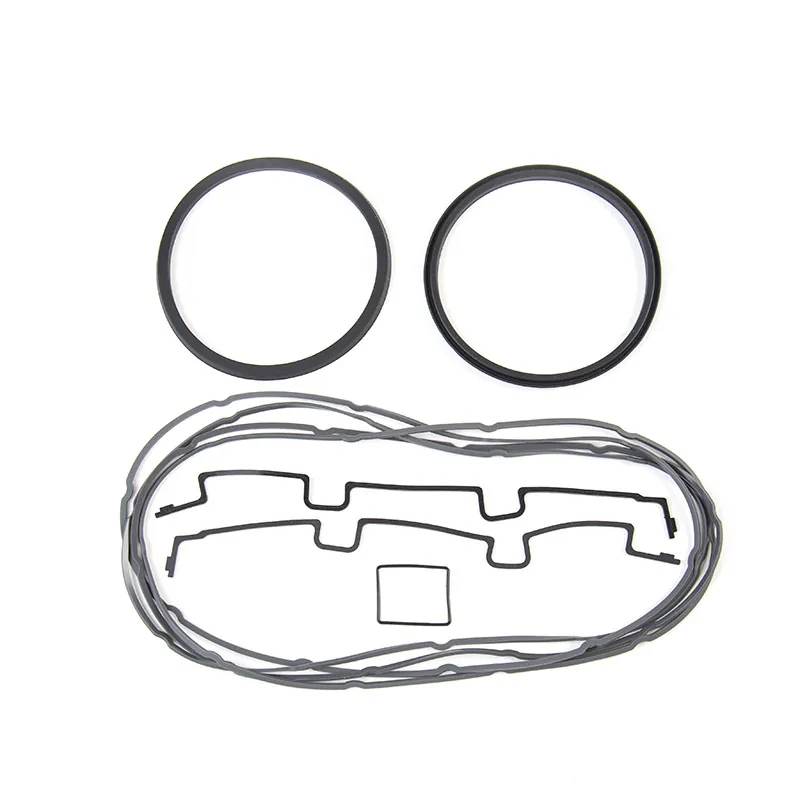
Rubber Seals
EPDM, NBR and FKM seals for water, oil and chemical resistance.
Compression Molding
The primary process for solid rubber parts.
Related Industries
Robotics
Sealing, damping and protective components for industrial, collaborative and service robots.
Industrial Automation
Seals, gaskets and moulded parts for actuators, conveyors and machine frames.
Electronics
Enclosure sealing, insulation and interface components for controllers and instruments.
Drones & UAV
Waterproof sealing and vibration isolation for airframes and payloads.