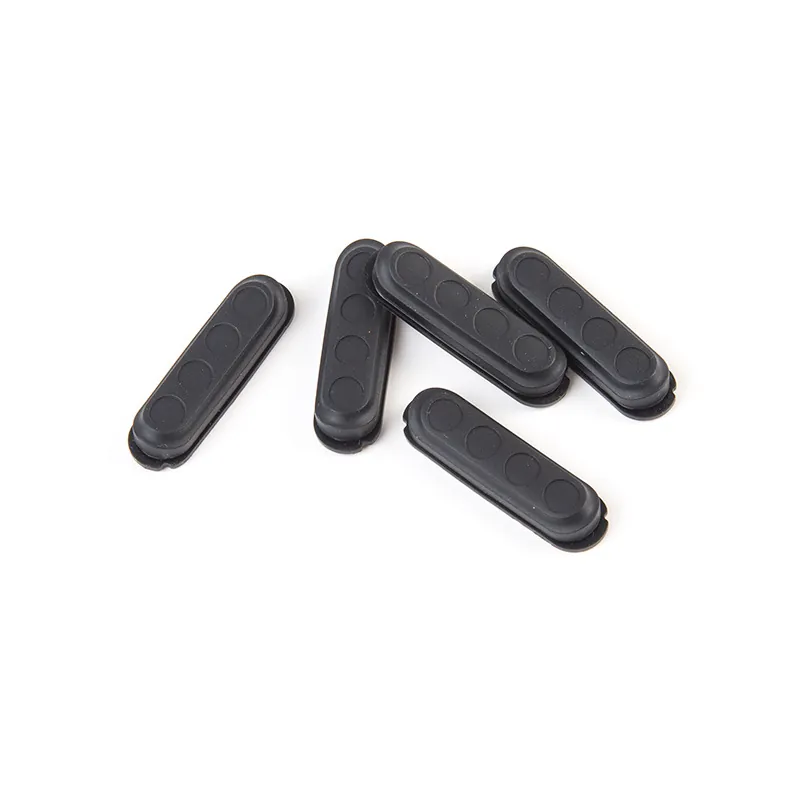
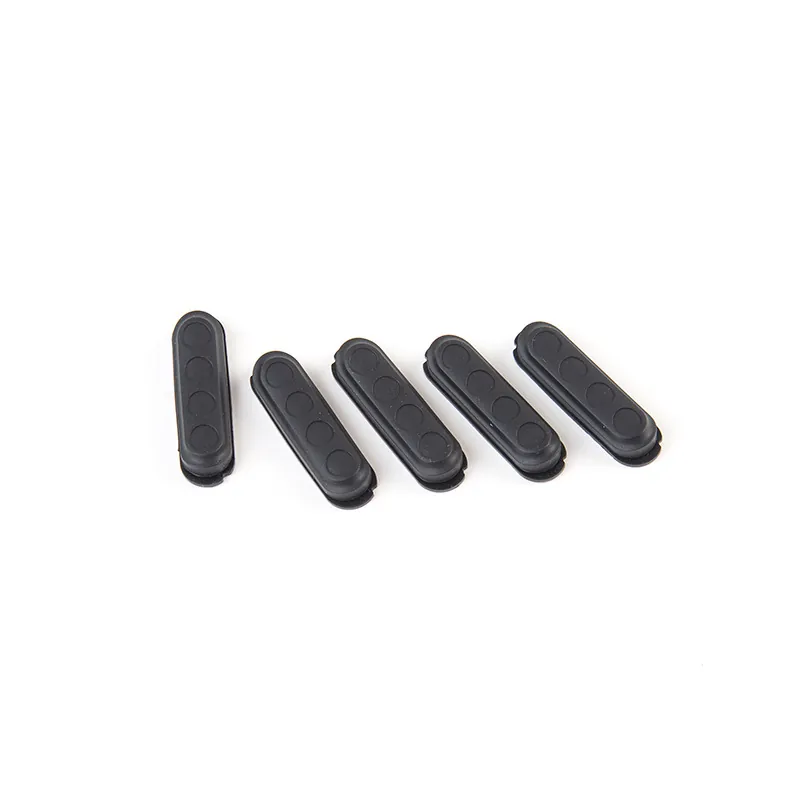
What Is a Silicone Keypad?
A keypad is the one part of an instrument that the user touches every day, so it has to work as an interface before it works as a component. Tactile response, actuation force, travel, legend durability, backlighting and sealing all interact: stiffen the web to improve feel and you change the force curve and the sealing behaviour. We mould custom silicone keypads for OEM electronics, industrial controllers and instruments, and we engineer the web geometry against the actuation and life targets rather than copying a previous part.
Applications
- Industrial controllers, HMIs and panel instruments
- Medical-adjacent instruments and laboratory equipment (non-regulated applications)
- Outdoor and handheld devices requiring sealing
- Remote controls and machine pendants
- Consumer electronics interfaces
The Engineering Problem
The two failure modes we are asked to solve most often are tactile loss and sealing failure. Tactile loss comes from web geometry and compound fatigue — the key gradually stops giving the user a clear response. Sealing failure usually happens at the perimeter of the keypad, not through the keys themselves, and it is a geometry problem: the perimeter seal is added as an afterthought rather than designed as part of the same moulded part.
Product Features
- Web geometry engineered for the required actuation force and travel
- Tactile feedback options: flat, tactile dome, or dome with click ratio defined by web design
- Perimeter sealing geometry integrated into the same moulded part
- Custom legends and graphics printed or laser-etched to your artwork
- Backlighting: selective, uniform or edge-lit using translucent silicone paths
- Non-conductive and conductive variants from the same tooling family
- Hardness selected for feel stability over actuation life
Material Options
| Material | When we would choose it |
|---|---|
| Silicone (HTV) | The default for keypads: temperature stability, tactile feel, sealing and cost |
| Liquid silicone rubber (LSR) | High-precision thin-wall keypads and very long actuation-life targets |
| Translucent silicone | Where backlighting or light-guide paths are required |
| Silicone with conductive pills | Where the keypad must switch a PCB directly |
Material Properties
| Property | Typical value / comment |
|---|---|
| Hardness | Typically 40-60 Shore A for the web. Softer gives a lighter touch, harder gives a more defined response |
| Tear resistance | Determines how well thin webs survive repeated actuation |
| Compression set | Affects how stable the tactile response stays over life |
| Temperature stability | Silicone keeps its feel across a wide temperature range where TPE or rubber would stiffen |
| Chemical resistance | Compound selected against cleaning agents the device will see |
Specifications
| Parameter | What we work to |
|---|---|
| Dimensions | Moulded to your drawing and artwork; key spacing to your PCB layout |
| Tolerance | ±0.05 mm on critical moulded dimensions; key positions held to your interface requirement |
| Operating temperature | Silicone -60 to +230 C (compound dependent) |
| Hardness | 20-80 Shore A; keypad webs typically 40-60 Shore A |
| Colour | Body and legend colours to sample; translucent grades for backlighting |
| Surface finish | Smooth, matte, textured or with defined gloss levels for wear |
| Waterproof / sealing | Perimeter seal design driven by gland geometry and compression set |
| Chemical resistance | Compound matched to your cleaning-agent list |
Production Process
- Artwork, PCB layout, actuation force and life targets collected
- Web geometry and perimeter seal designed together
- Compound and hardness proposed against feel and life targets
- Mould built, including any engraved legends
- First-article samples for actuation force, travel and sealing validation
- Graphics applied, then production with in-process checks
- Actuation and dimensional records issued with shipment
Customization
- Key shapes, legends and graphics to your artwork
- Backlighting design: selective illumination, light pipes, uniform glow
- Conductive switching: carbon pills or conductive ink tracks
- Integrated perimeter gasket, connector boot or display window
- Hardness variation between keys where different feel is required
- Adhesive backing or mechanical retention features
Tooling & Prototyping
Keypad tooling is where the actuation feel is decided, so the mould design work matters as much as the moulding. Legends can be engraved into the tool or applied afterwards depending on finish and durability requirements. First-article samples let the actuation force be measured before production, and tooling cost is refundable against volume orders.
MOQ, Quality Control & Packaging
| Item | How it is handled |
|---|---|
| MOQ | Quoted per project; keypad tooling cost and part size both affect the economical first order. |
| Quality control | Material verification, in-process checks, dimensional inspection, actuation force checks and visual inspection of legends |
| Packaging | Trayed or bagged to protect printed surfaces; kitted where required |
| Documentation | Dimensional and actuation records; artwork approval record |
Material Compliance
The silicone compound we mould carries third-party SGS reports covering EU RoHS 2015/863, REACH SVHC, phthalates, PAHs, halogen, US FDA 21 CFR 177.2600, LFGB Section 30 and 31, and GB 4806.16-2025 - all Pass. A part's compliance depends on the compound grade, the colour and the process, so the grade is matched to your requirement at quotation stage. See the material compliance page for the report numbers.
Silicone Keypads — Frequently Asked Questions
Mainly through web geometry and compound hardness. Stiffness of the web sets the force curve and the snap behaviour; hardness sets the touch character. We agree a force target with you and tune the mould geometry to it.
Yes. The key is that the perimeter seal is designed as part of the same moulded part rather than added as a separate gasket. Send the housing gland dimensions and we will design the seal to them.
It depends on the process and the environment. Laser-etched and moulded-in legends are the most durable. For printed legends we discuss the wear and cleaning exposure before choosing the method.
Yes — see our conductive silicone keypad page. Where a programme needs both tactile and conductive variants, we design the tooling family together to avoid duplicated tooling cost.
Yes. Selective backlighting uses translucent silicone paths through the part, or a light-guide layer. Send your LED layout and we will propose an approach.
Artwork or a drawing, the PCB layout with key positions, actuation force and travel targets, life expectancy, sealing requirement, and colour and finish expectations.
Related Products
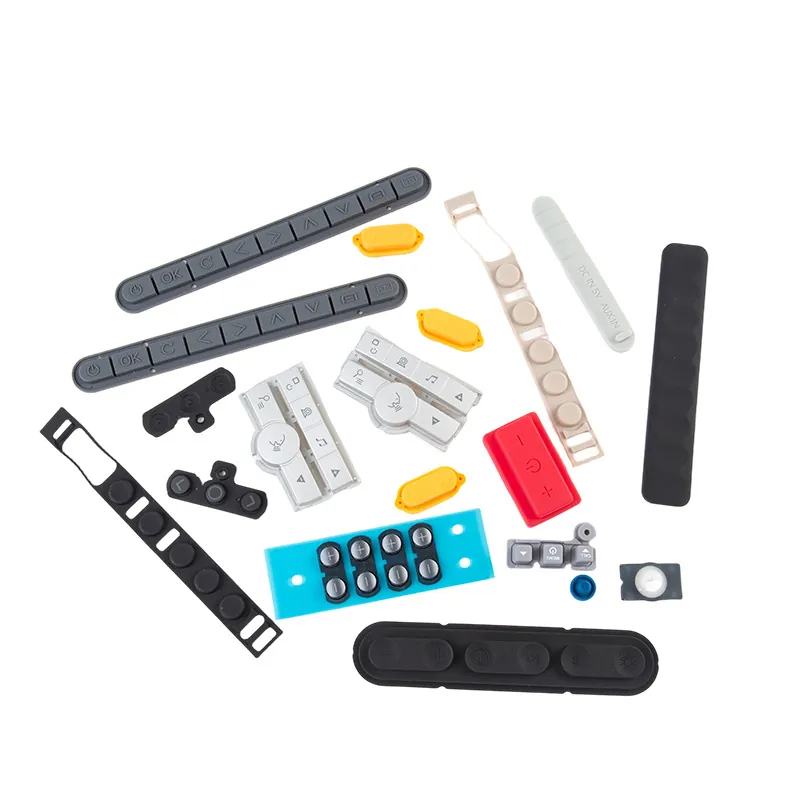
Conductive Silicone Keypads
Carbon-pill and conductive-ink keypads for direct PCB switching.
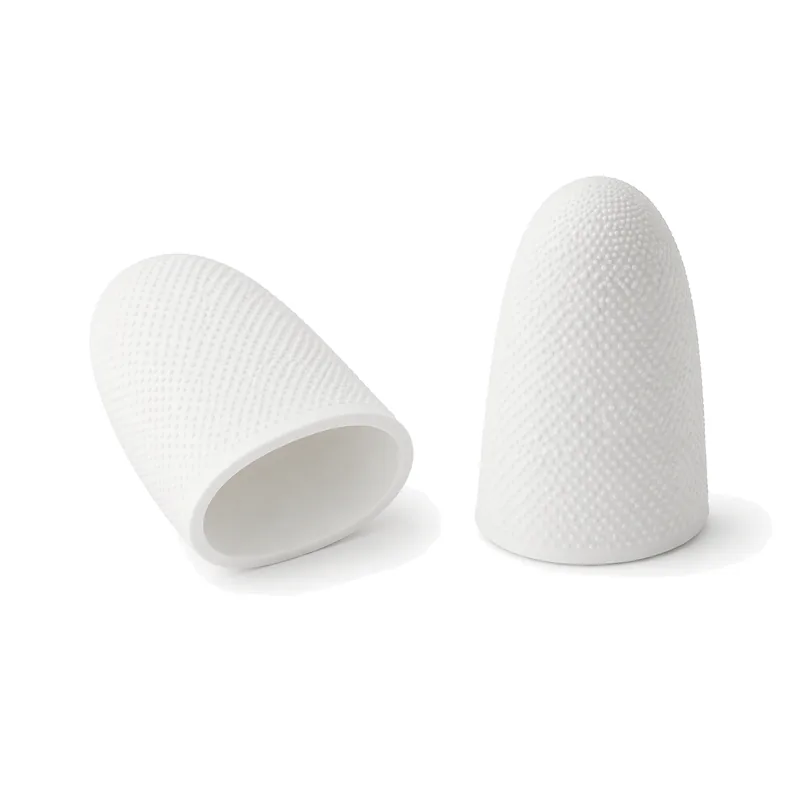
Protective Sleeves & Covers
Silicone boots and sleeves protecting joints, cables and connectors.
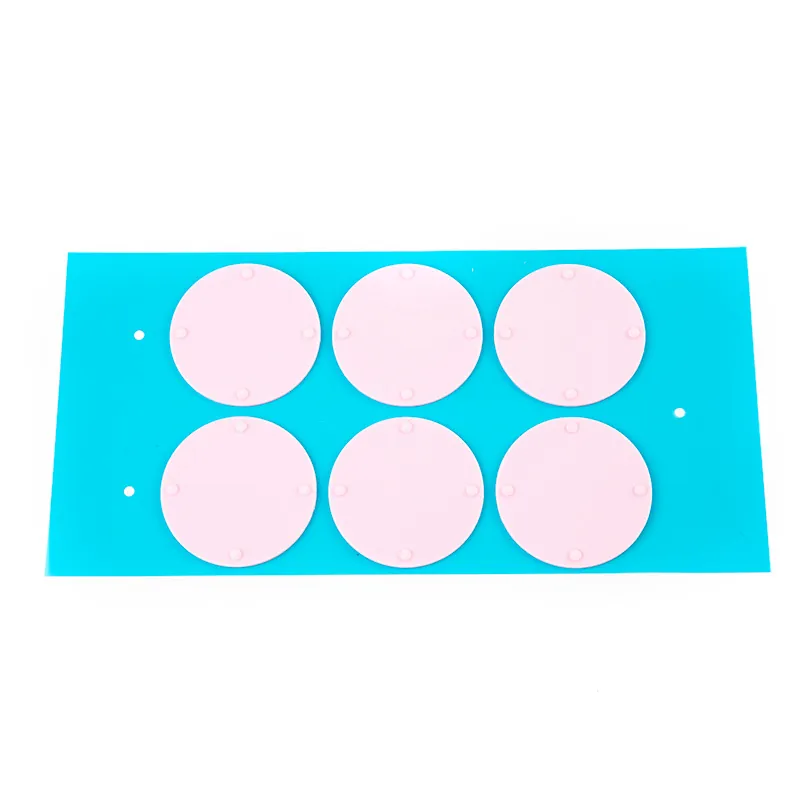
Rubber Feet & Pads
Non-slip feet and bumpers with controlled friction.
Related Industries
Robotics
Sealing, damping and protective components for industrial, collaborative and service robots.
Industrial Automation
Seals, gaskets and moulded parts for actuators, conveyors and machine frames.
Electronics
Enclosure sealing, insulation and interface components for controllers and instruments.
Drones & UAV
Waterproof sealing and vibration isolation for airframes and payloads.
Related Case Study
Silicone Components for a Humanoid Robot Finger
Contact and sealing parts on an articulated finger, built for wear and consistent tactile behaviour.
Gripper Protective Sleeves for Robot Fingers
Sleeves that sit over the robot fingers, supplied for laundry handling and parcel sorting.